What Does the UKCA Mark Mean on a Toy?
The little letters and symbols on a toy box, and what they actually tell you as a parent.
· 4 min read

The short answer
UKCA stands for UK Conformity Assessed. On a toy sold in Great Britain, it shows the toy is meant to meet the UK's toy safety rules. Toys can carry the EU's CE mark instead, which Great Britain continues to recognise. Either one should be there, alongside the name and address of the business responsible and any age warning.
What is the UKCA mark?
The UKCA mark is the UK's product marking for certain goods sold in Great Britain, and toys are one of them. The letters stand for UK Conformity Assessed, as set out in the government's guide to using the UKCA marking.
For a parent, the useful way to think about it is this. The UKCA mark shows the toy is meant to meet the safety requirements that apply to toys in Great Britain. Those requirements come from the Toys (Safety) Regulations 2011, and the government's guidance on those regulations says the marking should be fixed to the toy so that it's visible, legible and can't be rubbed off.
You'll usually find it on the toy itself, or on a label or the packaging if the toy is too small to carry it.
UKCA vs CE mark: what's the difference?
The CE mark is the European Union's equivalent. Before Brexit, toys sold in the UK carried CE. UKCA was introduced afterwards as the UK's own marking.
For shoppers, the key point is that CE still counts in Great Britain. The government's toy safety guidance says the regulations extend recognition of CE marking indefinitely in GB, and the general UKCA guide says the UK continues to recognise CE alongside or in place of the UKCA marking.
So on a toy shelf in England, Scotland or Wales you might see UKCA, CE, or both. Any of those is normal. An NHS children's health service puts it plainly in its toy safety advice: all toys should have either the CE mark or the UKCA mark. What should make you pause is a toy with neither.
What does "not suitable for children under 36 months" mean?
You'll often see this sentence, or a round symbol showing "0-3", on toys meant for older children. It means the toy has something about it that could be dangerous for babies and toddlers, most often small parts that a young child could put in their mouth and choke on.
The important thing is that it's a warning, not a suggestion. The same NHS page describes the age symbol as "a warning, not a recommendation", and says details of the risk will be next to the symbol or inside the packaging. A bright, chunky toy can still carry it, so don't judge by how a toy looks.
It's different from an age suggestion like "ages 5+", which is about whether a child will enjoy the toy or manage it. That kind of label is the maker's guide to who it's designed for. The 0-3 warning is about safety, and it's worth taking literally if there's a toddler in the house, including with older siblings' toys.
What to check when buying a toy online
In a shop you can turn the box over. Online you have to look a bit harder.
- A business name and a contact address. The government's toy guidance says the toy should carry the manufacturer's name and contact address, and for an imported toy the importer's name and postal address too. A seller you can't identify is one you'd struggle to reach if something went wrong.
- The UKCA or CE mark. Look for it in the photos or product details. If you can't find it, ask the seller before you buy.
- Age warnings in English. The guidance says warnings must be in English and start with the word "Warning". A toy with no warning at all, when it plainly has small parts, is a red flag.
- Who you're buying from. The NHS advice is to buy from brands you know. On a marketplace, check who the actual seller is, not just the site you're on.
When the toy arrives, check it over before handing it to a child. Loose parts, sharp edges or a missing label are all worth contacting the seller about.
Do Fidget Street toys carry the UKCA mark?
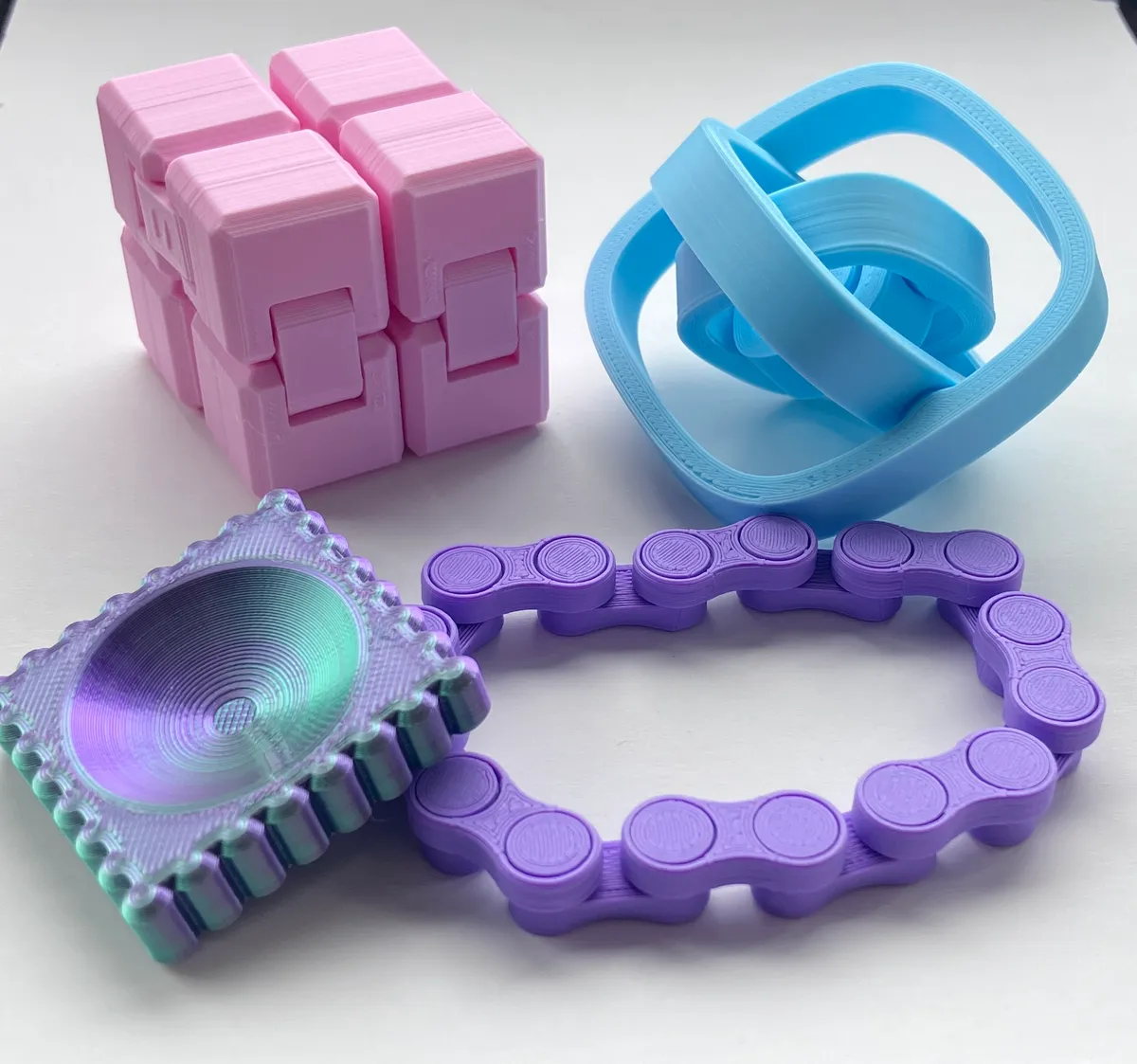
Yes. Our toys carry the UKCA mark and are made to the UK toy safety standard, BS EN 71. They're 3D-printed by us in Kent from PLA, a plant-based polymer.
They also carry an age warning, because fidget toys tend to have small parts: they're not suitable for children under 36 months. You'll find more about how we approach safety on our safety page, and if you have a question about a toy before you buy, our FAQ is a good place to start. If there are toddlers at home as well as older children, keep fidgets somewhere the little ones can't reach.
Questions people ask
What does UKCA stand for?
UK Conformity Assessed. It is the UK product marking used for certain goods, including toys, sold in Great Britain.
Is the CE mark still valid on toys in the UK?
Yes, in Great Britain. Government guidance says recognition of CE marking on toys has been extended indefinitely in GB, so a toy can carry UKCA, CE or both.
What does the 0-3 symbol on a toy mean?
It means the toy is not suitable for children under 36 months, usually because it has small parts that could be a choking hazard. It is a safety warning, not an age recommendation.
Is a toy with no UKCA or CE mark safe?
Toys sold in Great Britain should carry either the UKCA or the CE mark. If you cannot find either, ask the seller before buying or choose a different toy.
What should I check before buying a toy online?
Look for the UKCA or CE mark, a business name and contact address, and clear age warnings in English. Buy from sellers you can identify and contact.
Made in the UK, marked for the UK
Our toys carry the UKCA mark and are made to the UK toy safety standard, BS EN 71.
How we make our toys safe