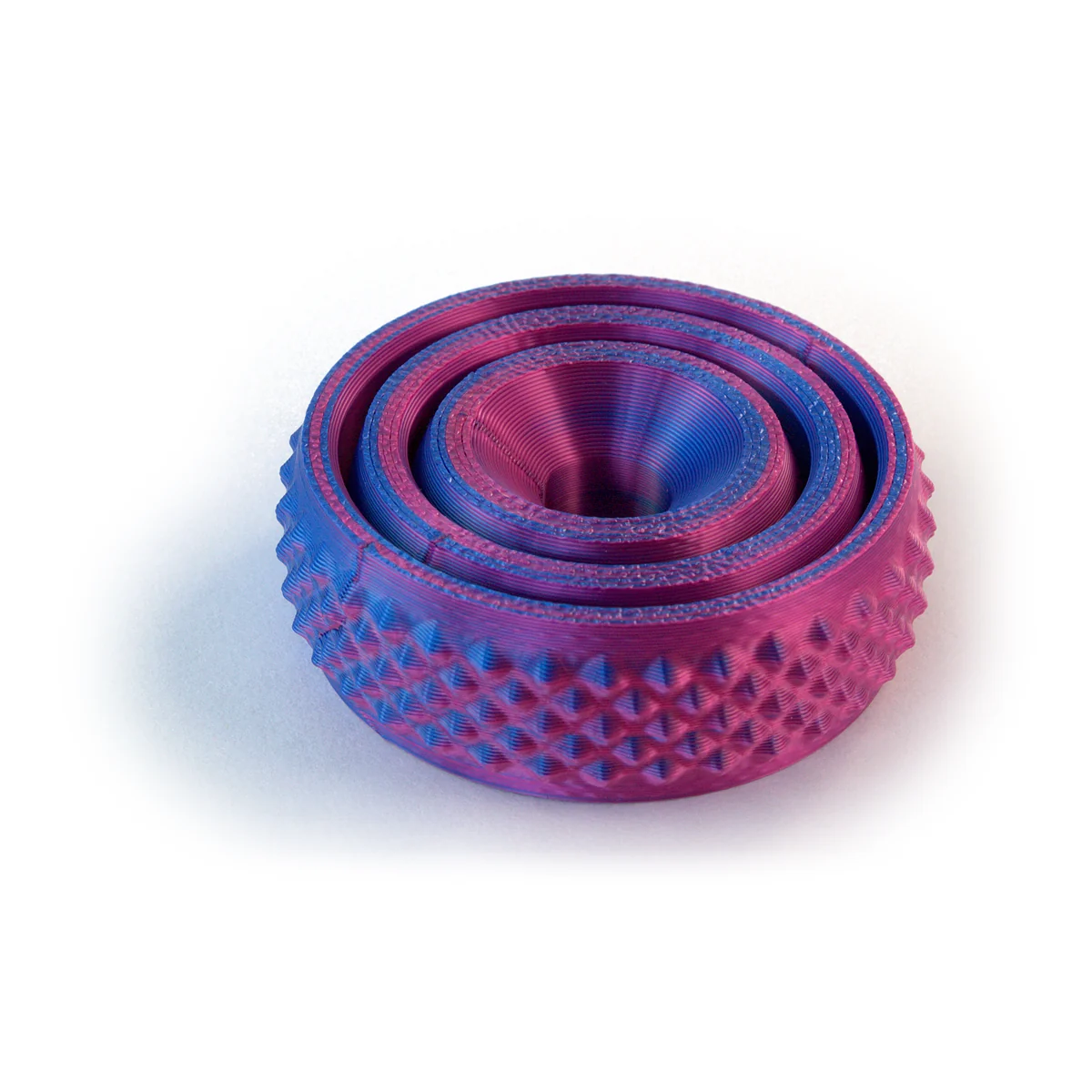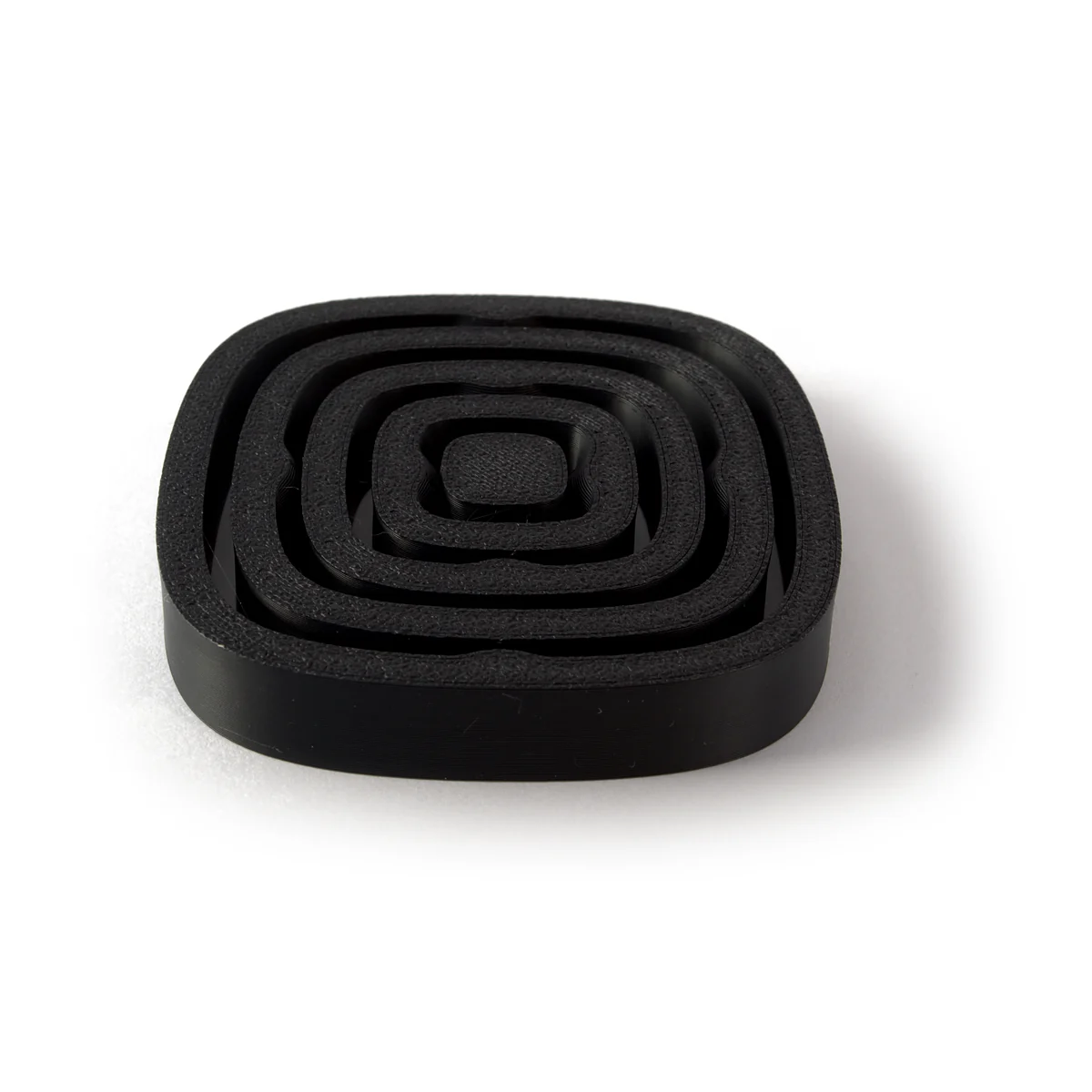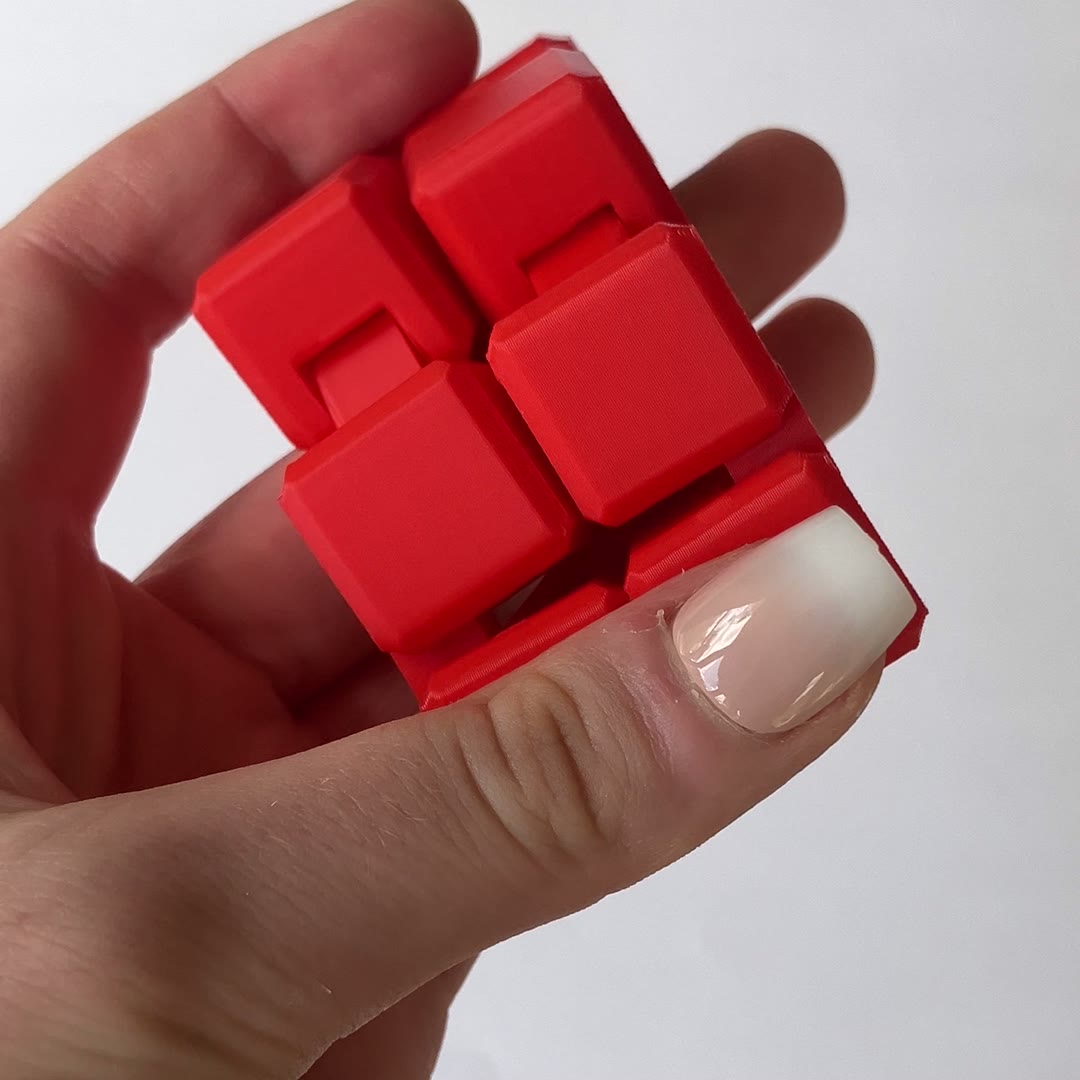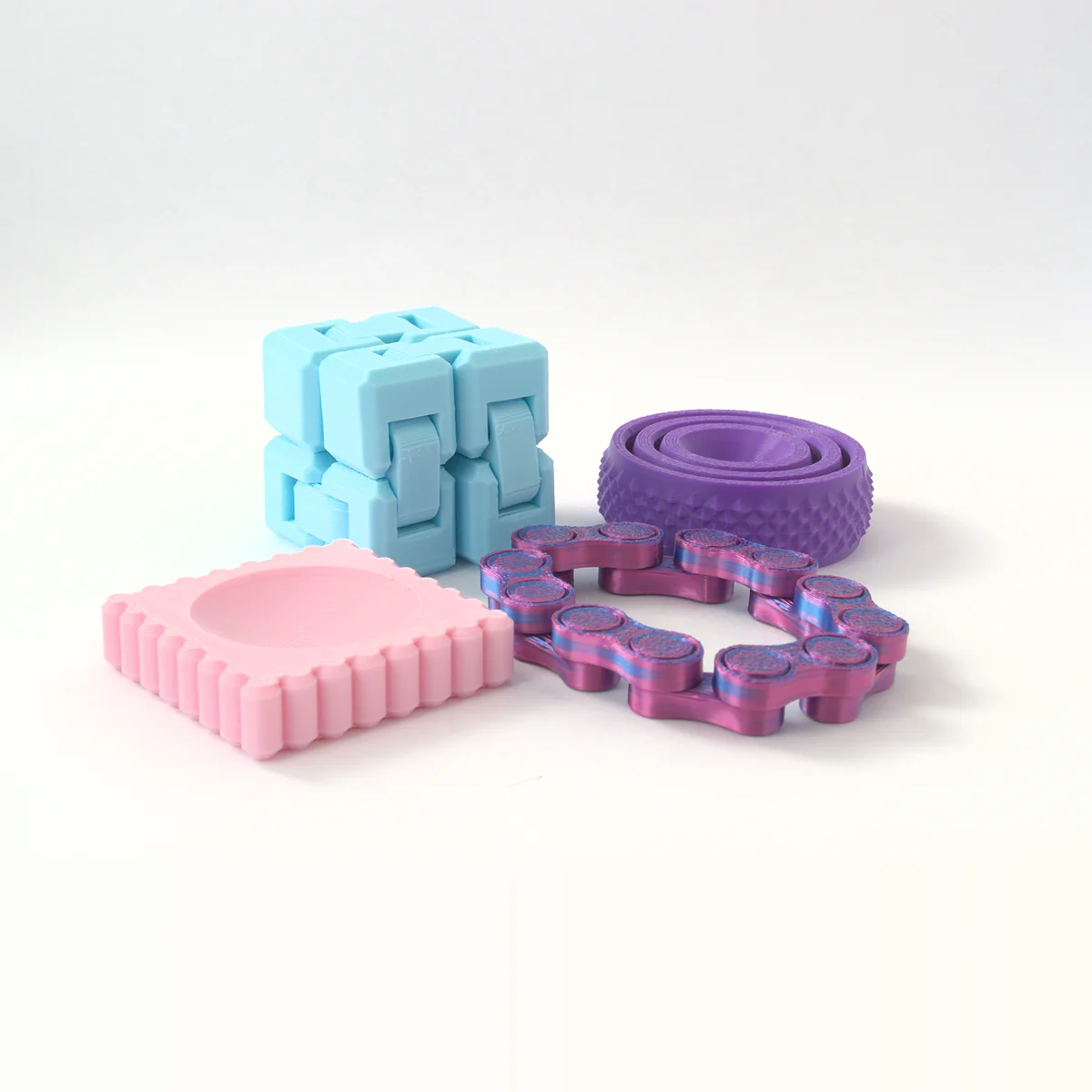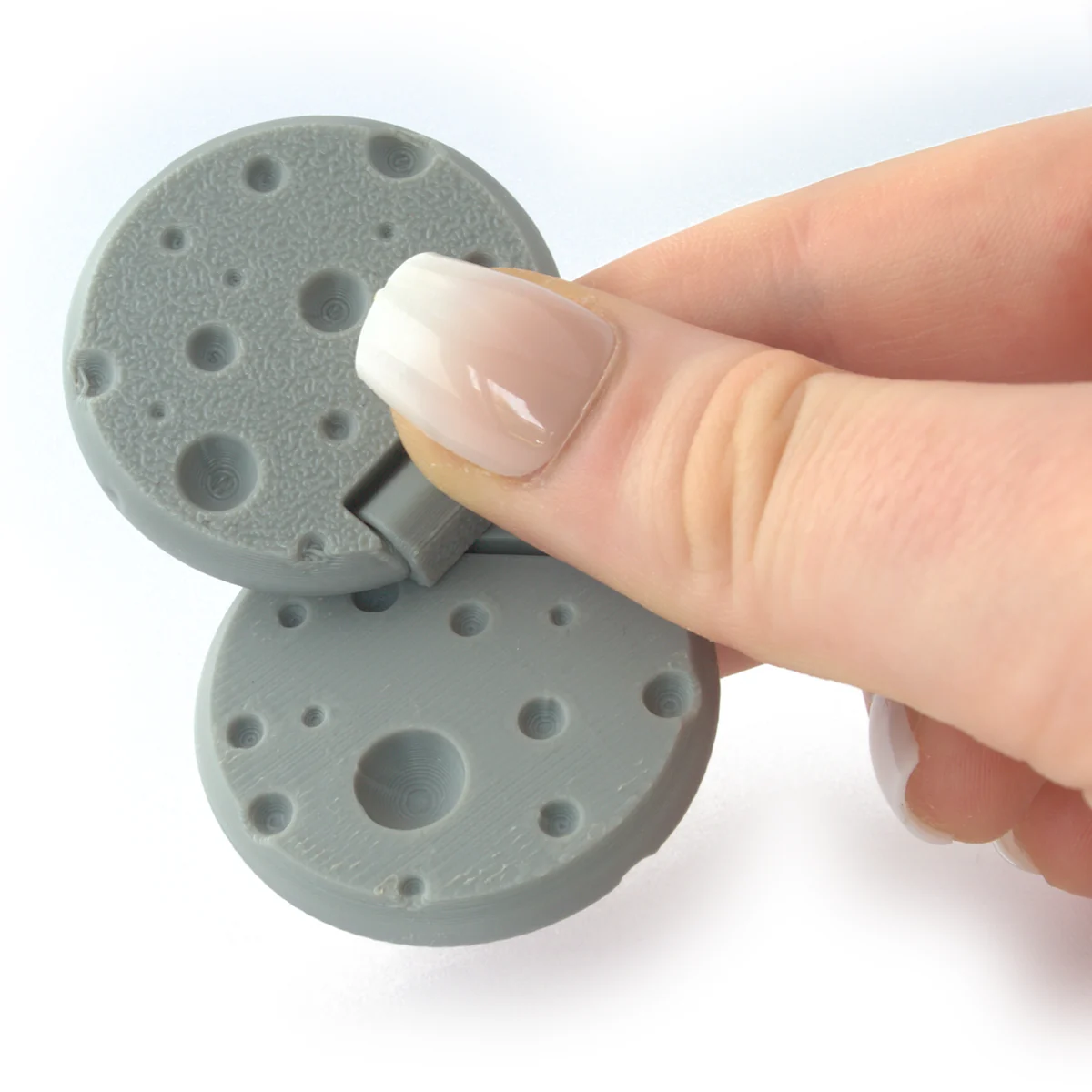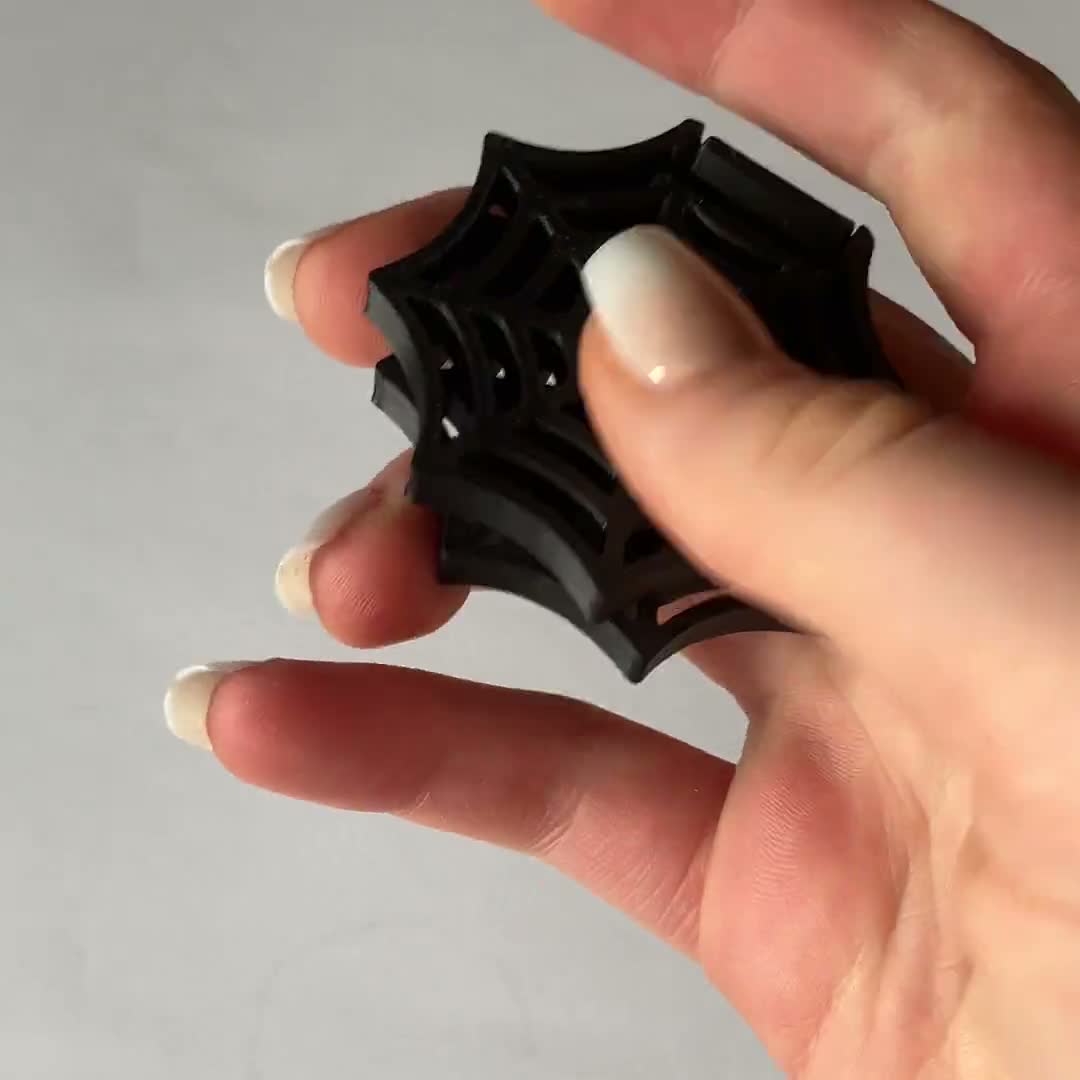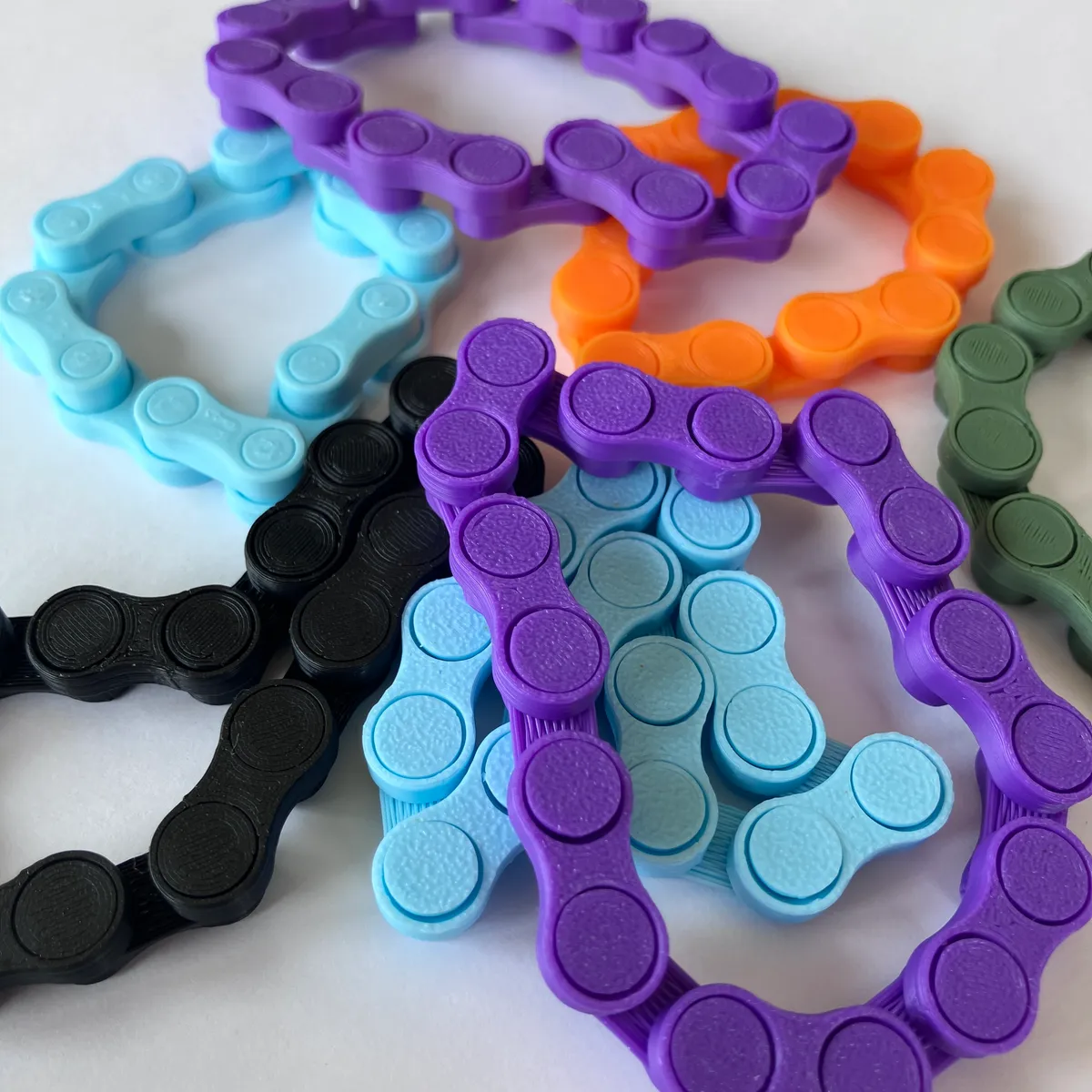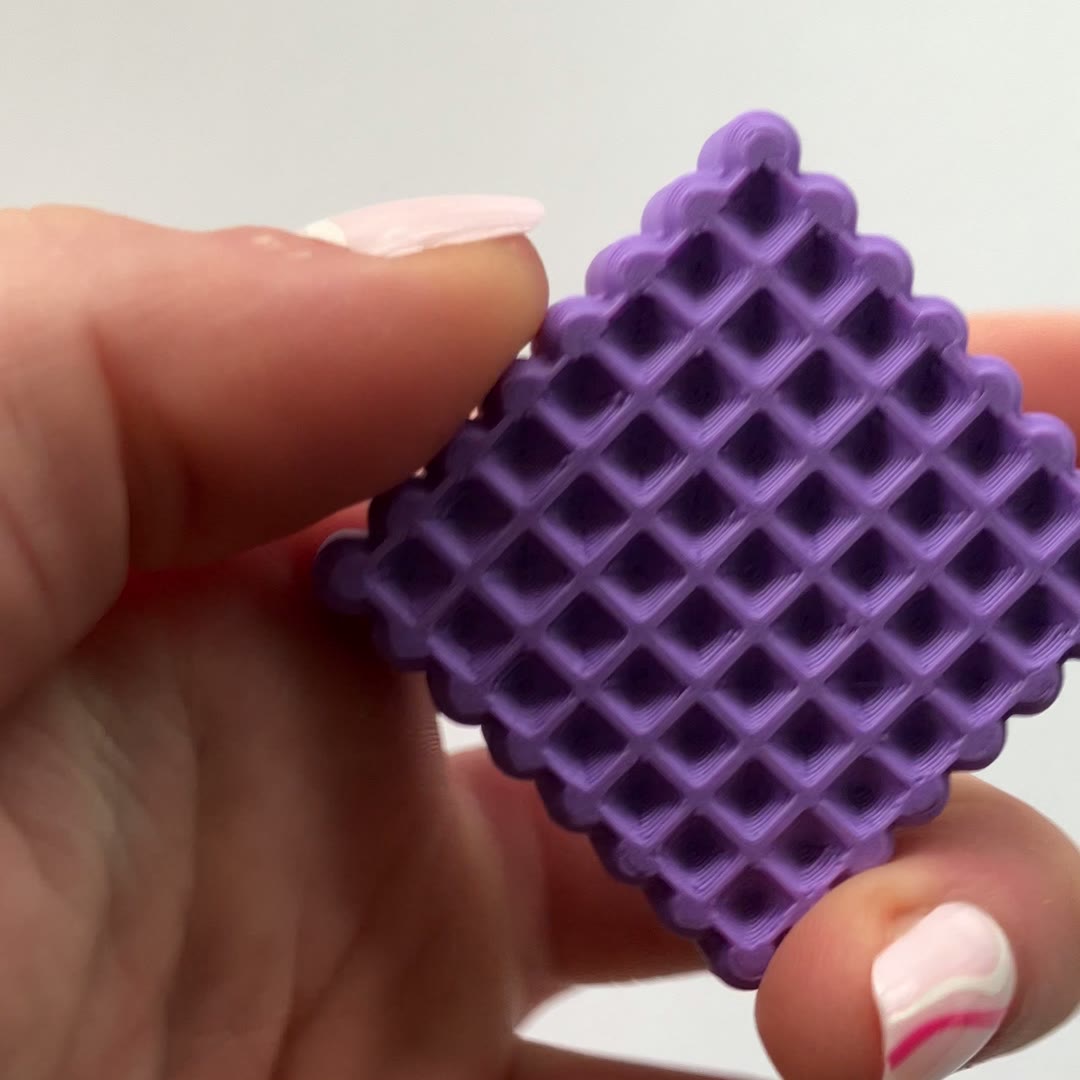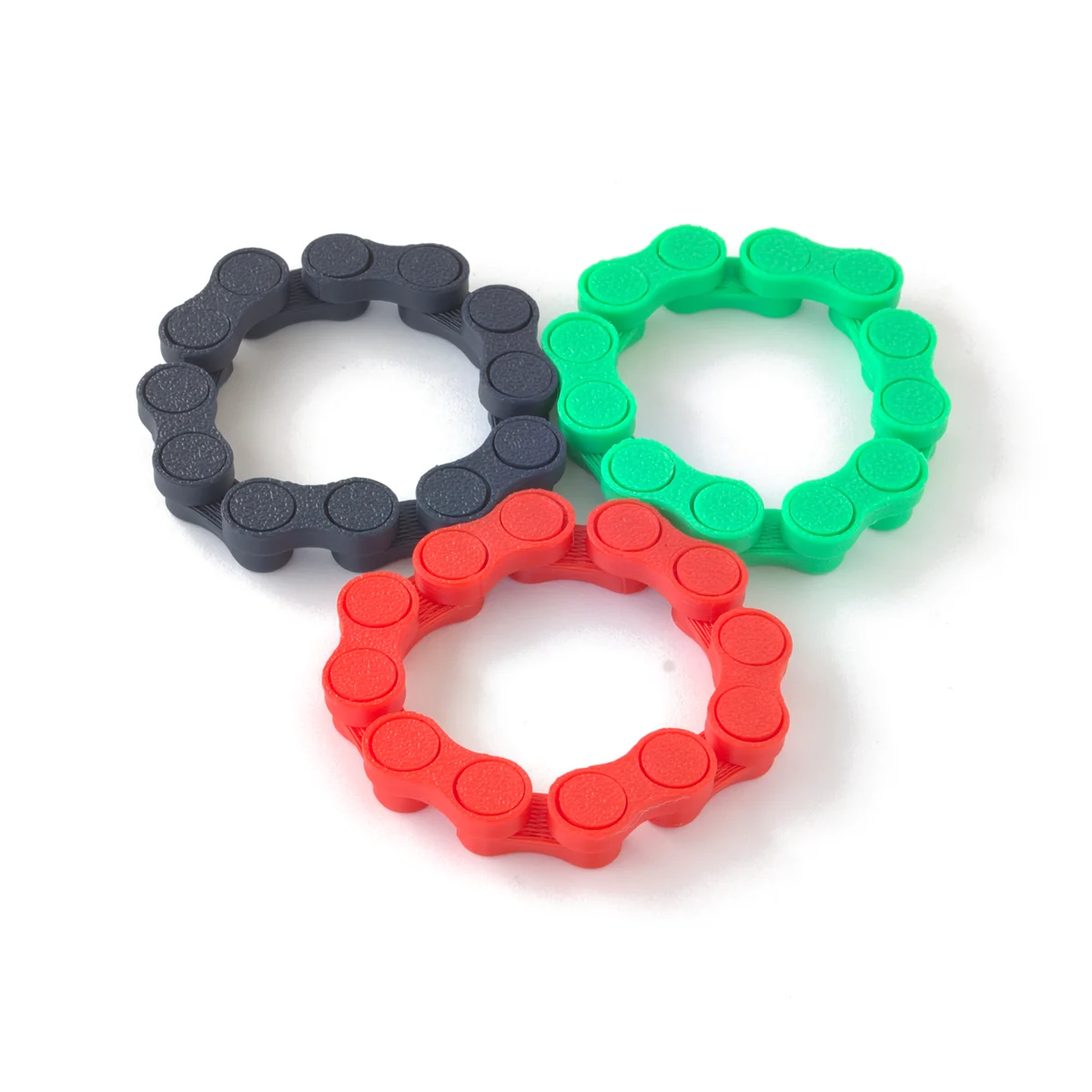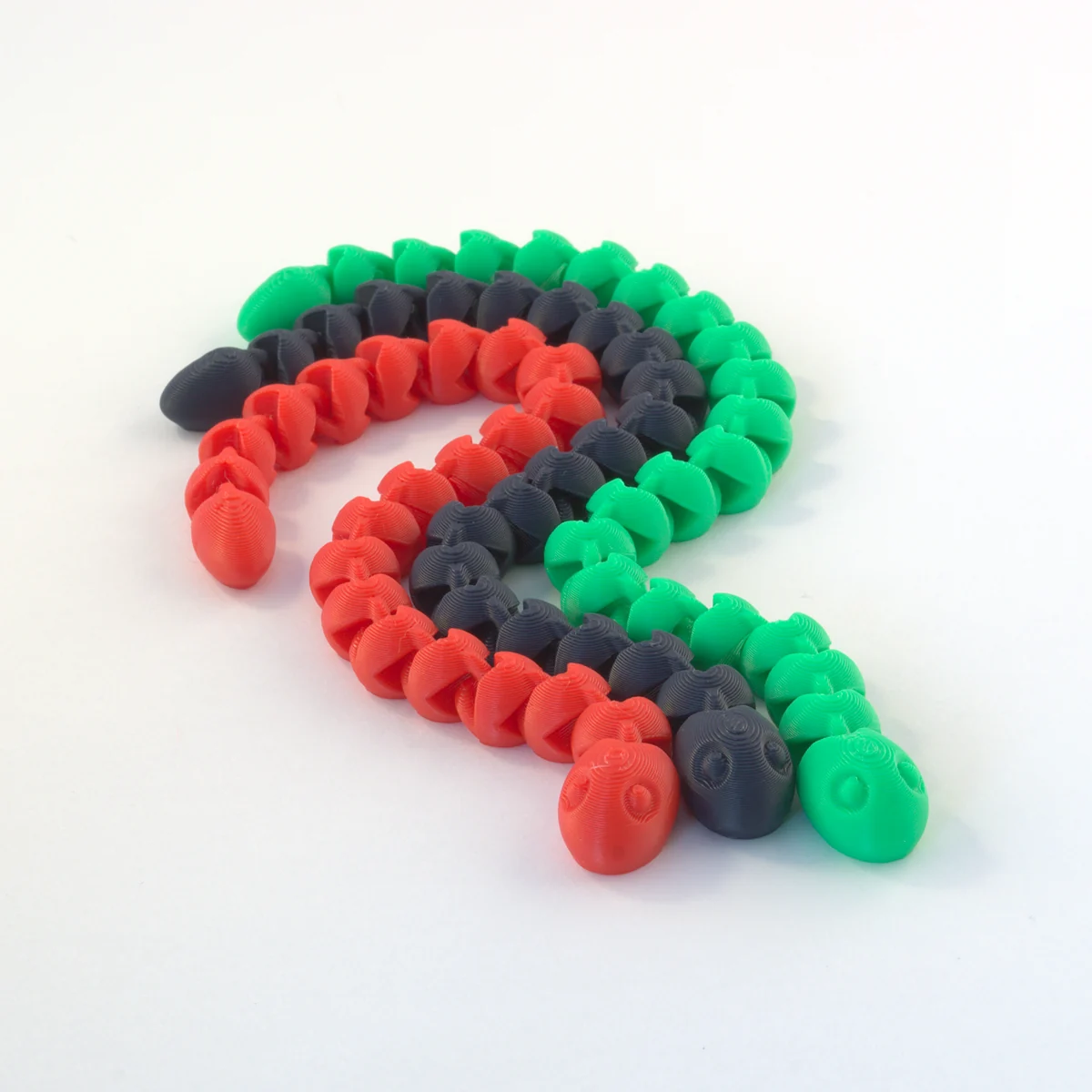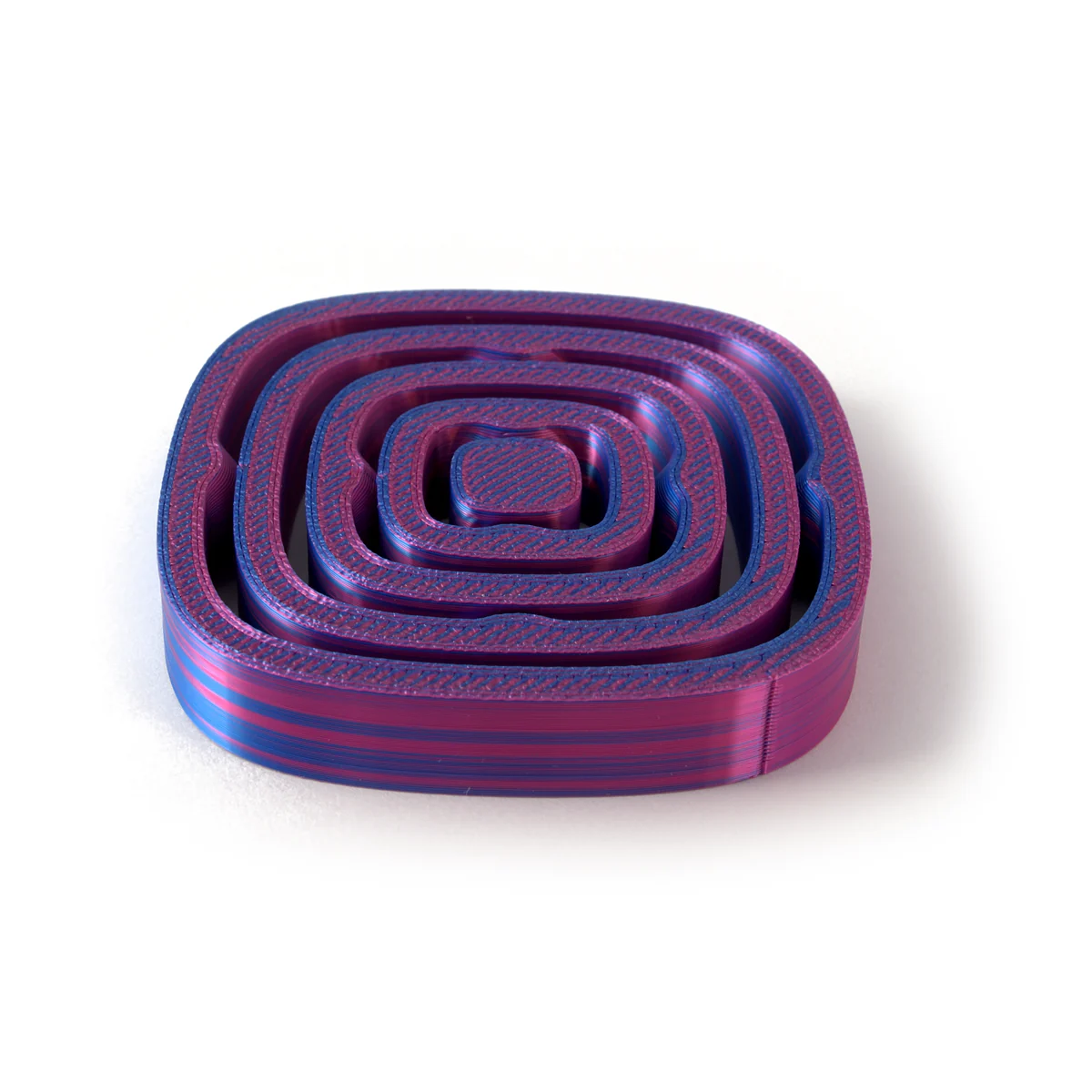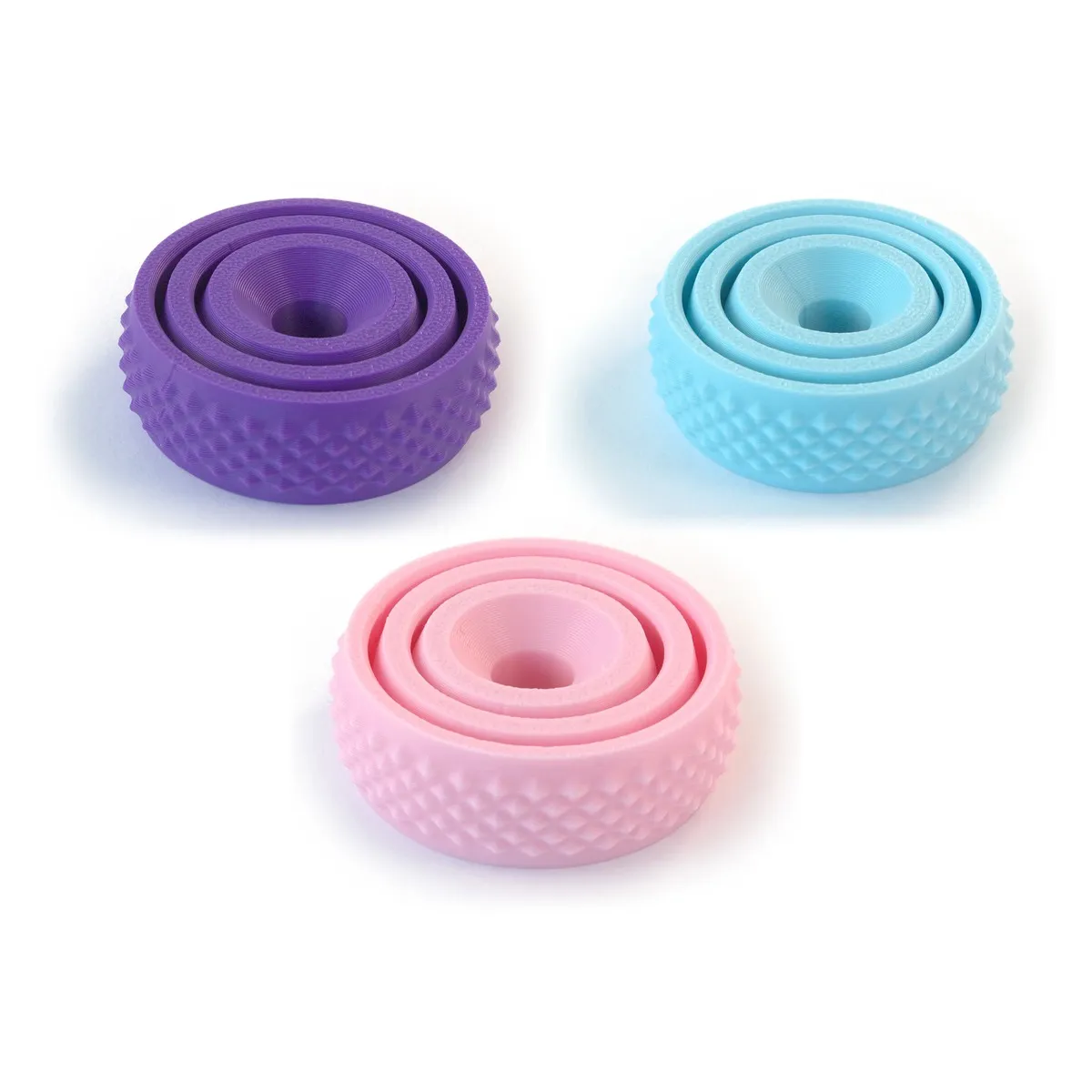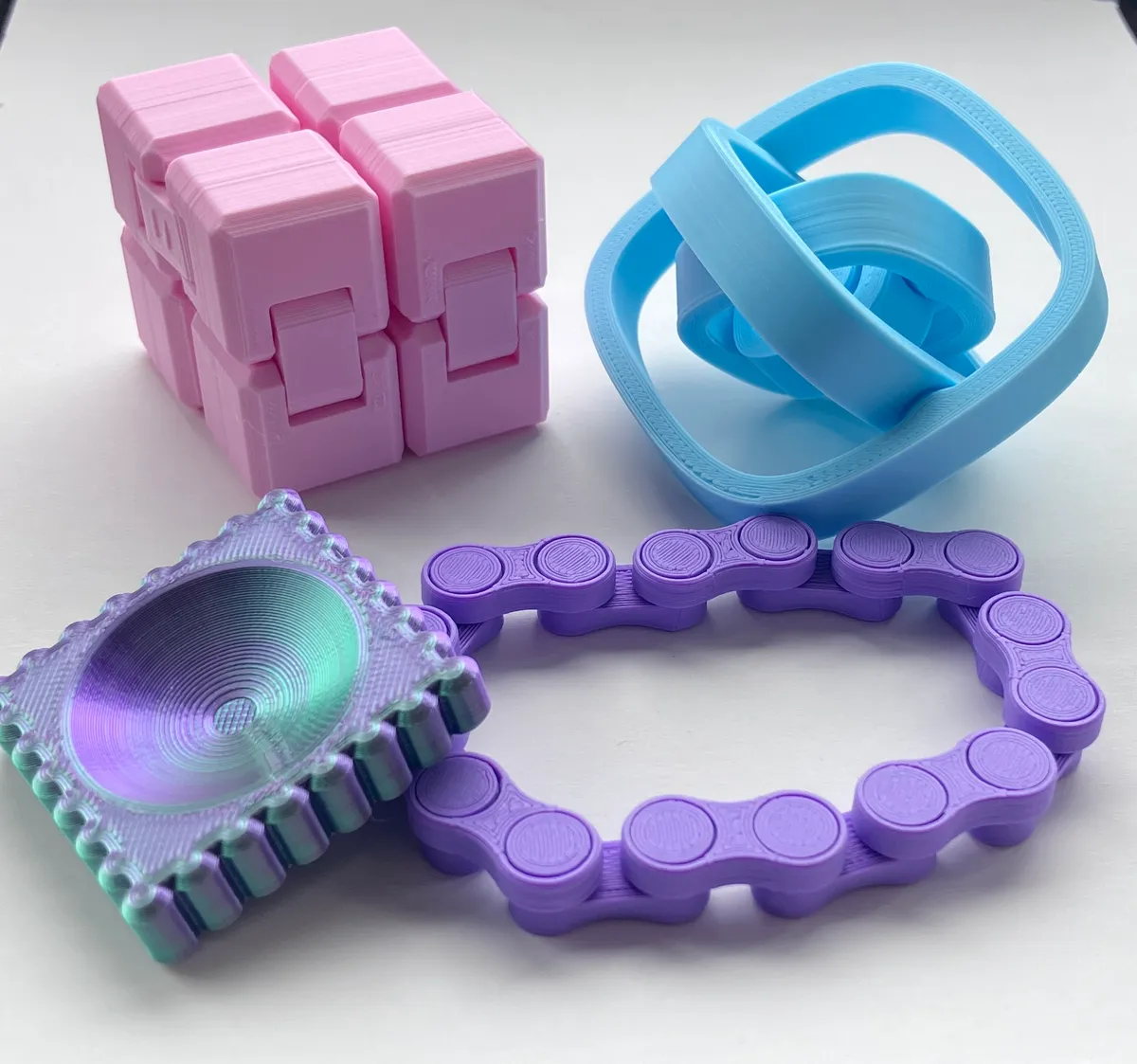
The Classic Calm Kit
£10.99
Everything we make is printed from PLA, a polymer made from plants rather than crude oil.
£10.99
£3.49
£3.49
£8.99
£3.49
£12.49
£8.99
£8.99
£4.99
£3.99
£5.49
£4.99
£4.99
£3.99
£3.49
£7.99
£8.99
£3.49
£3.49
£9.99
£3.49
£3.49
There is nothing in this collection right now. The full shop has everything we make.
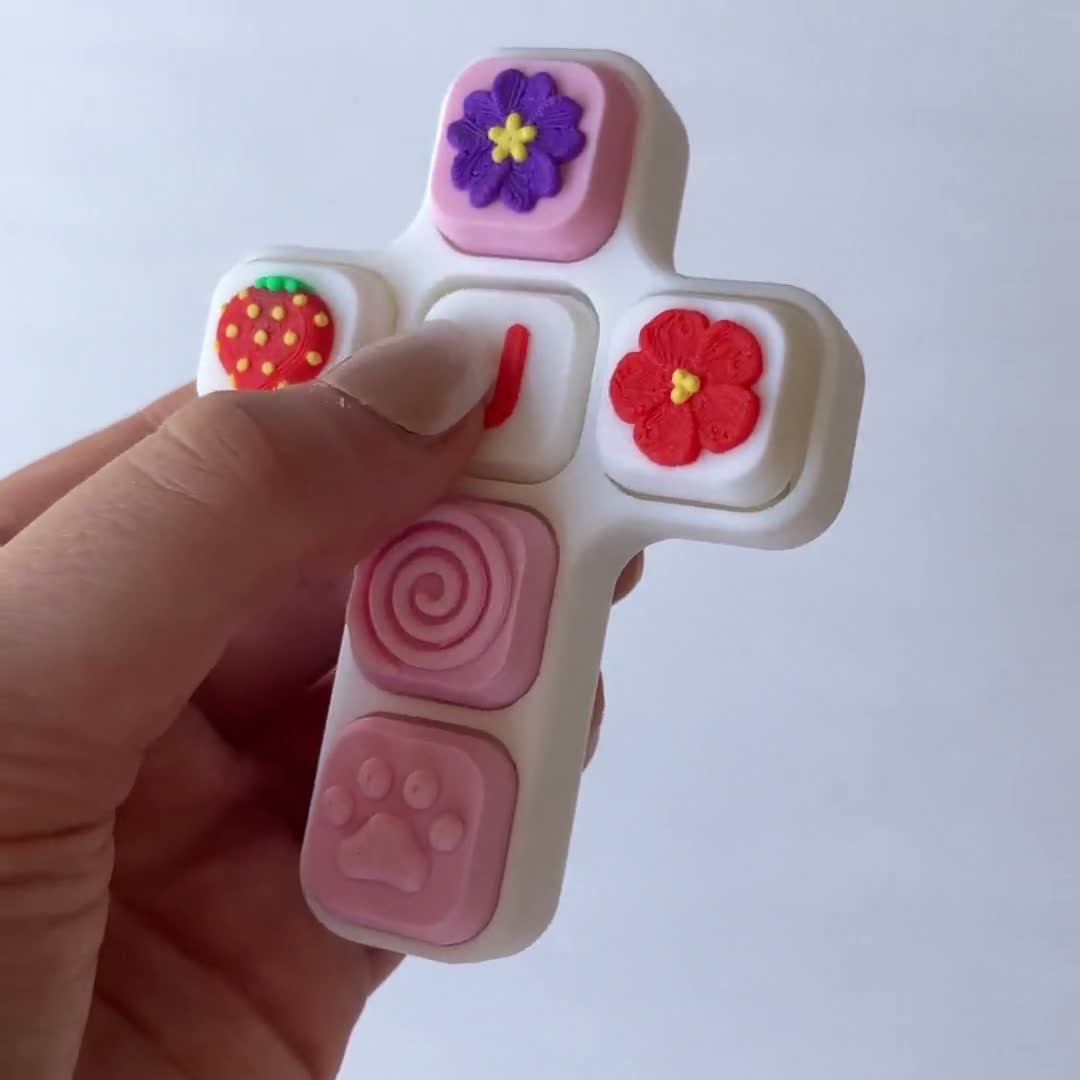
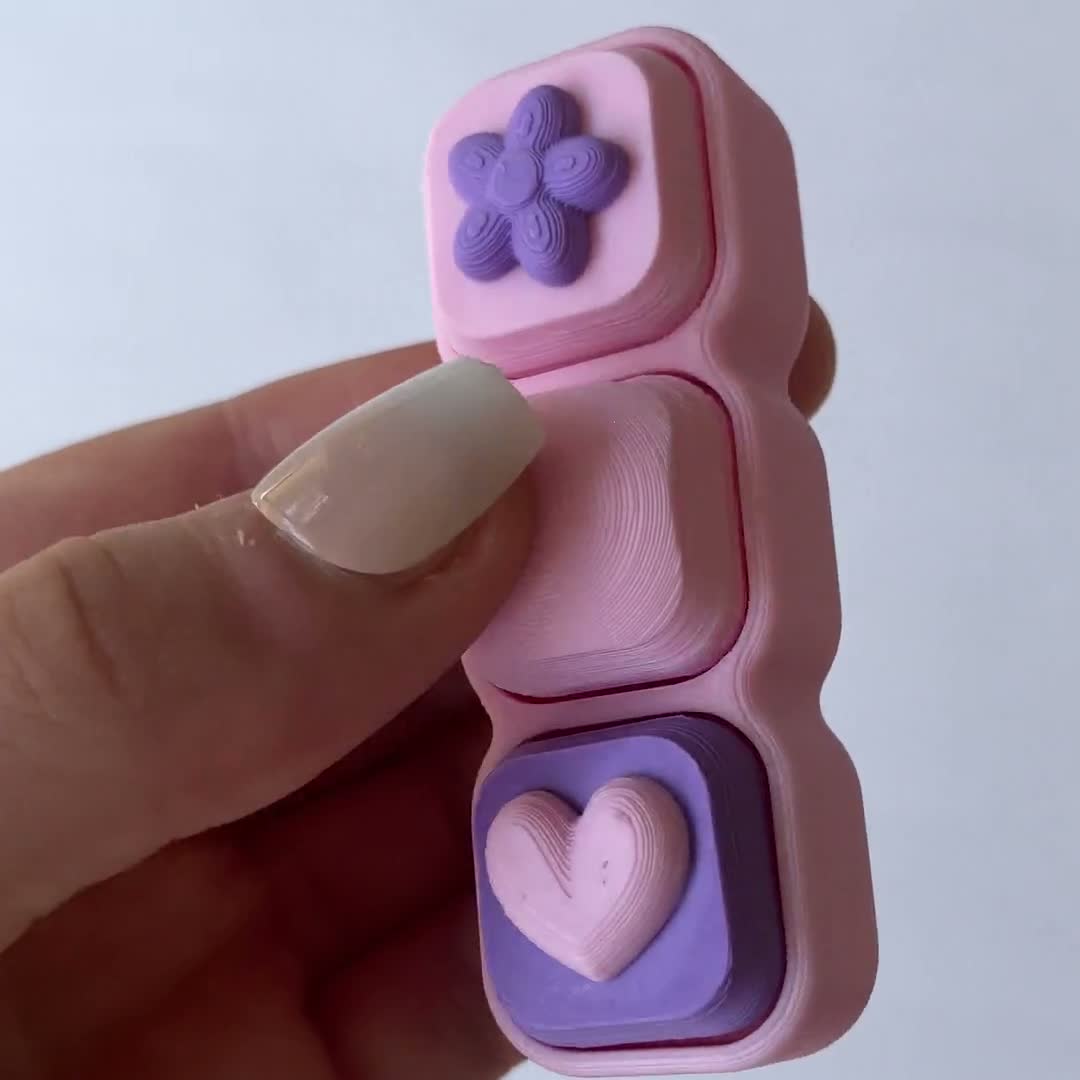
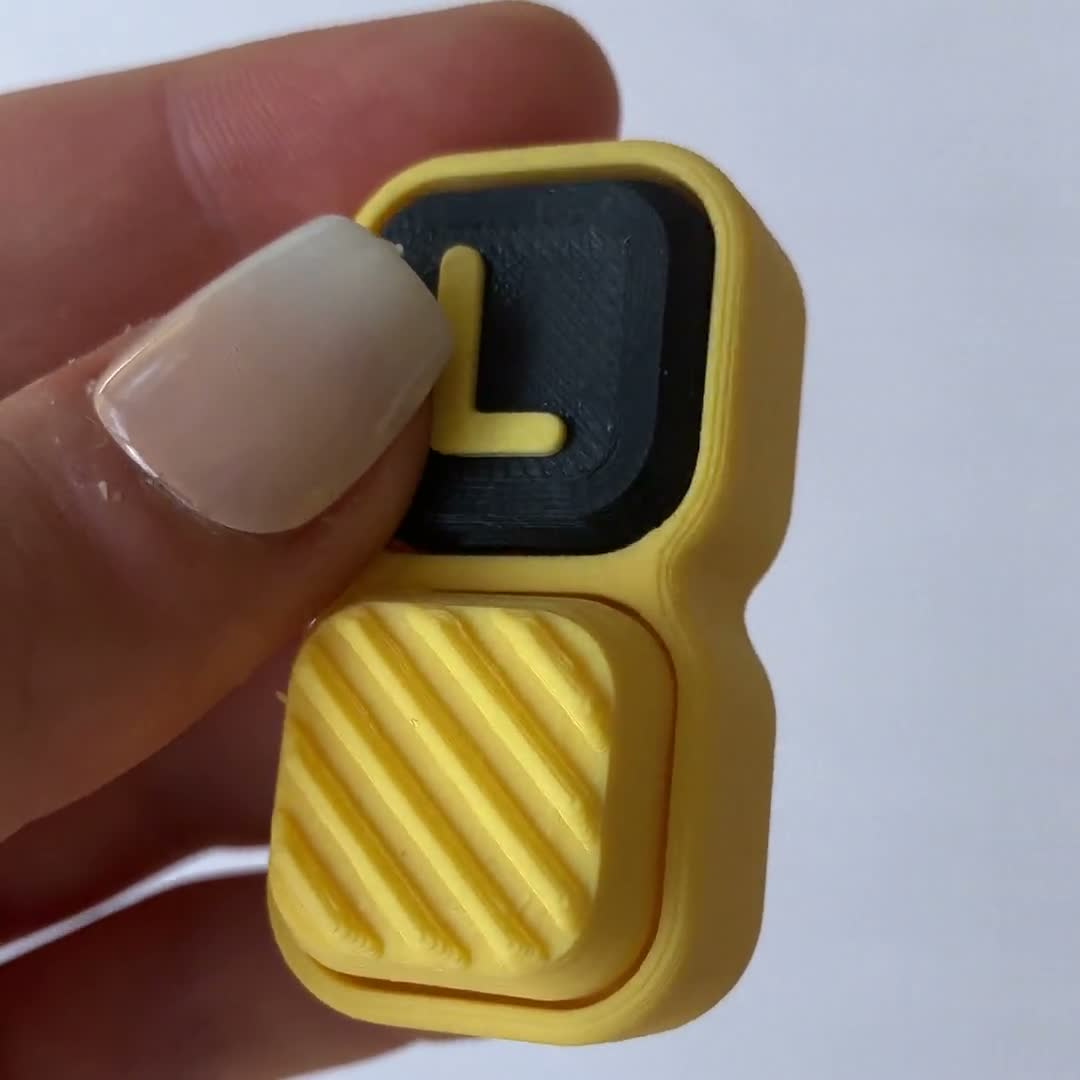
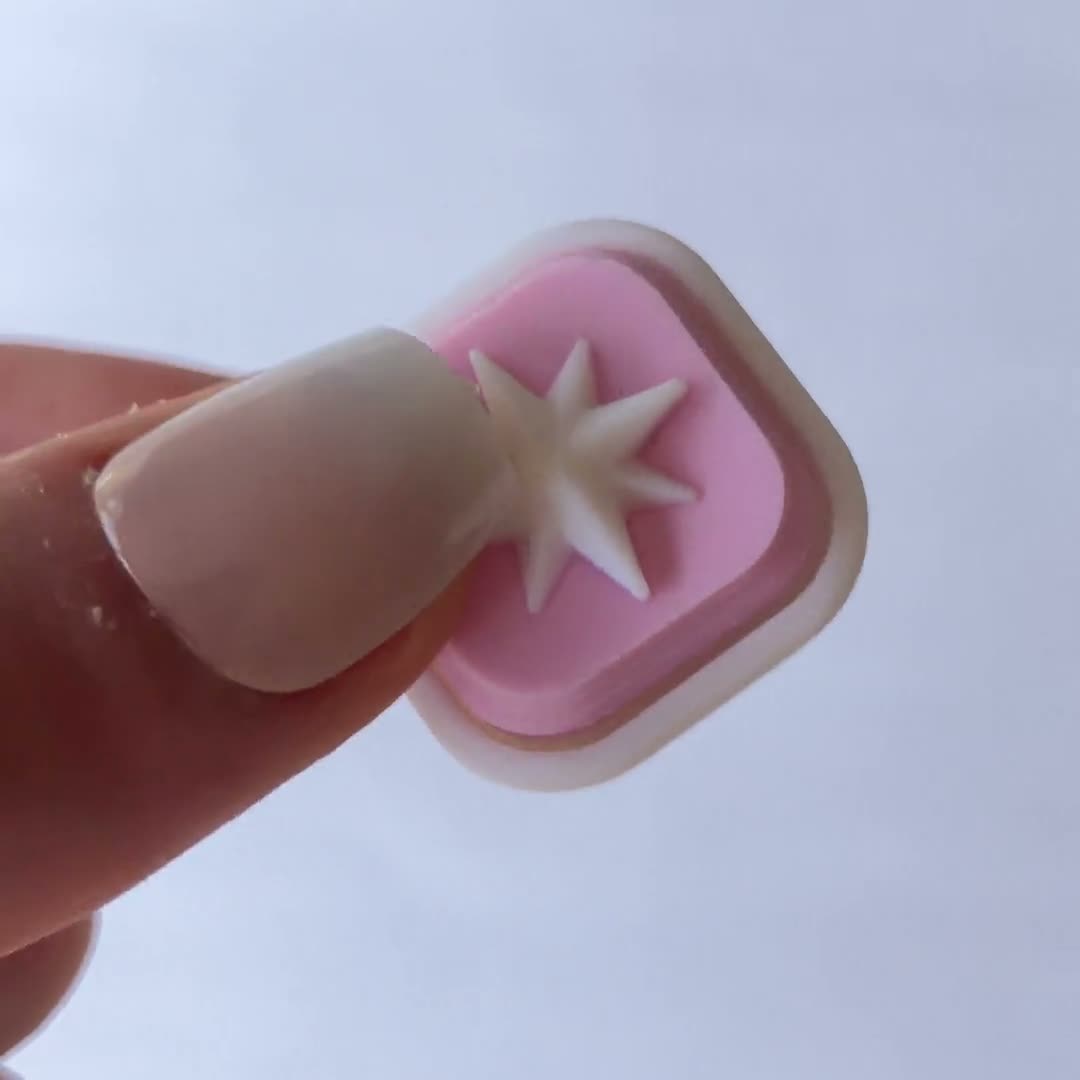
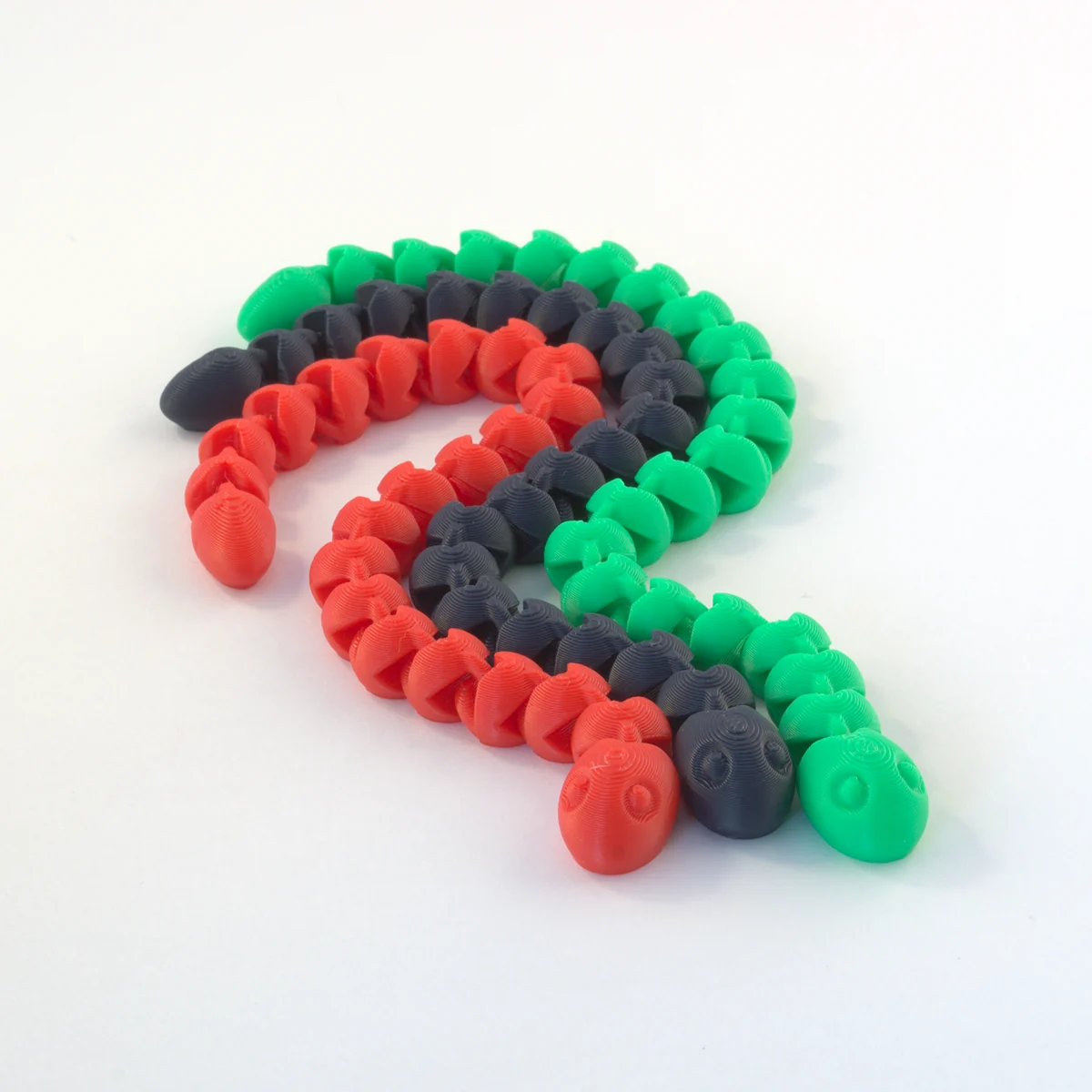
Every toy in our shop is 3D printed in Kent from PLA, so every toy we sell is on this page. PLA is polymerised from lactic acid fermented from crops such as corn starch, sugarcane and cassava, so the material starts life in a field rather than a refinery.
It is also lower-carbon to make, and it is worth being exact about how much. A 2024 review pooled more than 80 life-cycle studies of PLA. Measured to the point the material leaves the factory, its median footprint was 1.63 kg CO2e per kg, lower than PET, polypropylene or polyethylene. Measured across its whole life, including disposal, the median was 3.91 kg CO2e per kg, which the authors describe as comparable to those plastics. Our sustainability page has the full reference.
PLA breaks down in industrial composting and nowhere else: not in a garden compost bin, and not in landfill. So for us the greenest thing about a fidget is never needing to replace it. We print in small runs rather than shipping pallets of stock, and we would rather sell you one toy that lasts than three that do not.
Every toy carries the UKCA mark. Not suitable for children under 36 months: small parts.
Not in the way most people mean it. PLA breaks down only in industrial composting, which needs sustained heat and controlled conditions. It will not break down in a home compost bin, and in landfill it behaves much like any other plastic.
It takes less carbon to produce: a median of 1.63 kg CO2e per kg to the factory gate, below PET, polypropylene and polyethylene. Counted to the end of its life the median is 3.91 kg CO2e per kg, comparable to those plastics. Both figures come from a 2024 review of more than 80 life-cycle studies, referenced on our sustainability page.
Every toy is 3D printed by us in Kent, England.