How to Clean Fidget Toys
Fidgets live in pockets and get handled all day. Here's how to get them clean without ruining them.
· 5 min read

The short answer
Wash a plastic fidget toy in warm, not hot, soapy water. Use a soft toothbrush to get into textures, joints and gaps, rinse it, then let it dry completely before anyone uses it again. Keep 3D-printed PLA toys out of the dishwasher, away from boiling water and off radiators, because the plastic softens with heat and can warp.
How do you clean a plastic fidget toy?
You don't need anything special. A bowl, washing-up liquid, an old soft toothbrush and a clean tea towel will do.
- Fill a bowl with warm water and a small squeeze of washing-up liquid. Comfortable for your hands is about right.
- Dunk and swish the toy for a minute to loosen grime.
- Brush the fiddly bits. A soft toothbrush gets into ridges, bumps, the gap round a clicker cap and the joints on hinged toys.
- Rinse in clean water so no soap is left in the gaps.
- Shake it and pat it dry with a towel, then leave it somewhere airy until it's completely dry inside and out.
Most fidgets only need this now and then. A quick wipe with a damp cloth is enough between proper washes.
Cleaning textured fidgets and moving parts
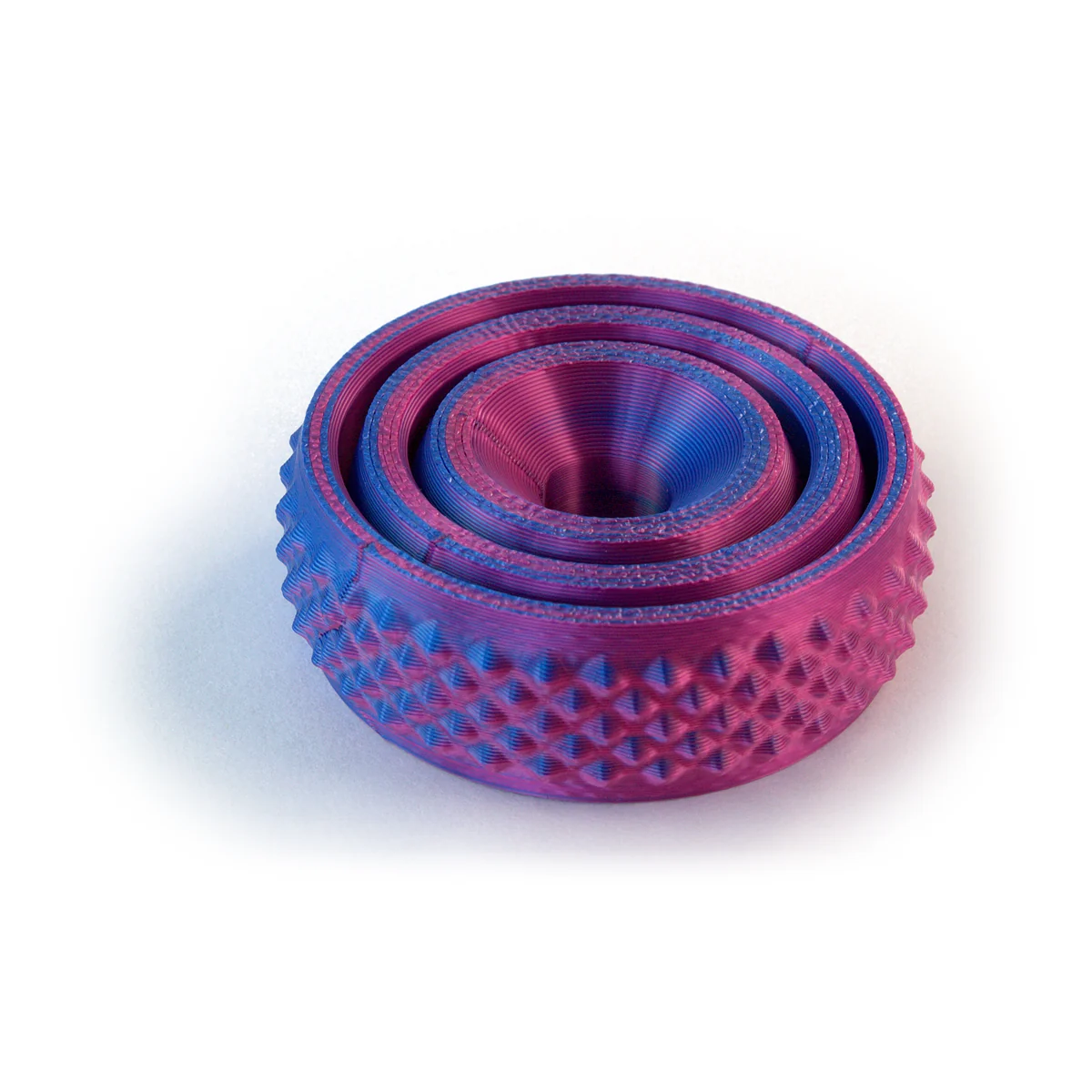
Textured toys collect the most grime, because every bump and groove is somewhere for skin and dust to sit. Brush along the pattern rather than across it, and give it a second rinse.
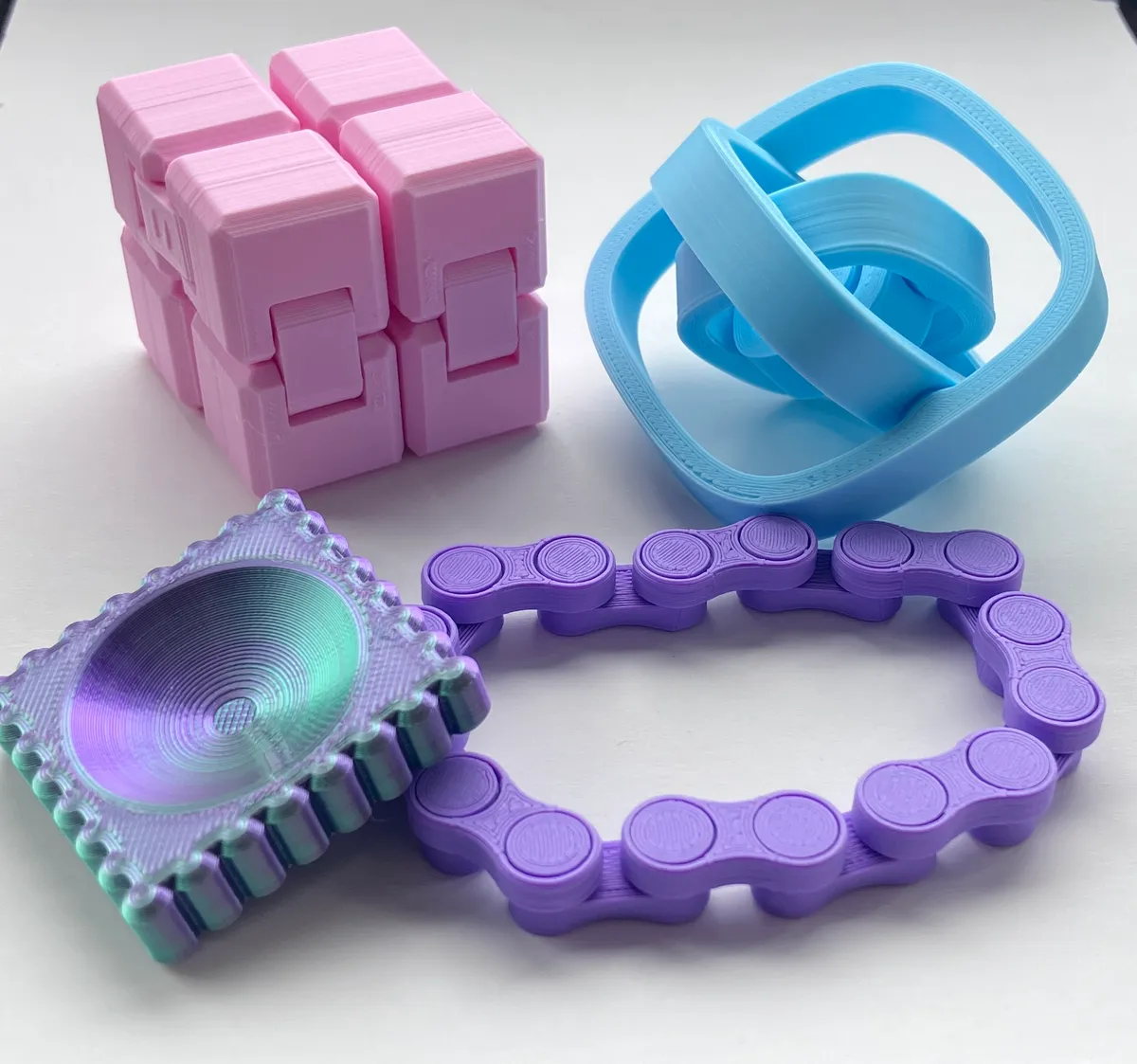
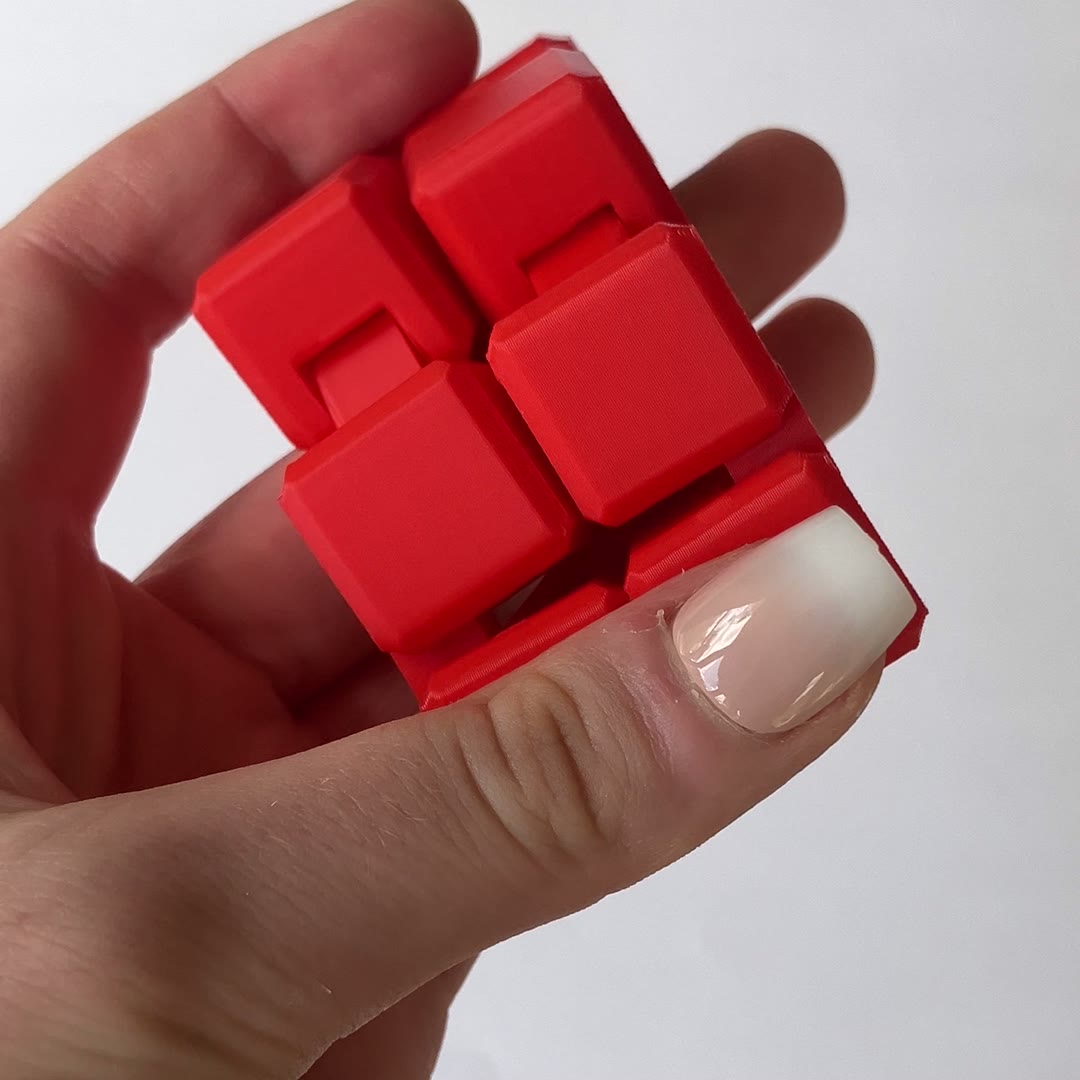
Toys with moving parts need a bit more patience. On a spinner, a clicker, an infinity cube or a flexi snake, water gets into the gaps and takes a while to come out. Give the toy a good shake, work the moving parts a few times to push water out, and then leave it to dry for longer than you think it needs. Putting a toy back in a pocket while it's still damp inside is how it starts to feel sticky or smell musty.
If a toy has a part that comes out, take it out to wash and dry the pieces separately. Don't try to take apart anything that wasn't designed to come apart.
Can fidget toys go in the dishwasher?
Not 3D-printed ones. Many printed fidgets, including ours, are made from PLA, and PLA doesn't cope well with heat. A materials data sheet for one of NatureWorks' Ingeo PLA grades gives its glass transition temperature as 57.5 °C, the point where it starts to go from rigid to soft. The printer maker Prusa puts it simply: PLA gets soft and deforms at temperatures over 60 °C.
That's lower than people expect, and it rules out a few common habits:
- The dishwasher. The hot wash and drying cycle can bend a toy out of shape.
- Boiling or very hot water. Stick to water that's comfortable on your hands.
- Drying on a radiator or with a hairdryer on its hot setting.
- Leaving it in a hot car or on a sunny windowsill. Prusa also notes that PLA degrades under UV light, so long spells in strong sun aren't good for it either.
Strong solvents are worth skipping too. Nail varnish remover, white spirit and bleach are far more than a toy needs and can spoil the surface of some plastics. Warm soapy water does the job anyway. A warped toy can't be straightened again, and a bent hinge or switch won't feel right afterwards.
Keeping shared fidgets clean in a classroom
Schools and clubs often keep a box of fidgets for children to borrow, which is lovely, but it means lots of hands on the same toys.
The good news is it doesn't need anything harsh. UK Health Security Agency guidance for schools and childcare settings says that cleaning with detergent and water is normally all that is needed, because it removes most germs. That's the same warm soapy wash described above.
- Wash the box on a routine, such as the end of each week, rather than waiting until toys look grubby.
- Keep a "to wash" tub so a toy that's been chewed or sneezed on gets taken out of circulation straight away.
- Encourage hand washing before and after using the shared box.
- Give a child their own if they use a fidget every day. It's more hygienic, and they'll look after it better.
If you're kitting out a whole class, our guide on fidgets in the classroom covers which types work best.
When should you replace a fidget toy?
Check toys over when you clean them. If a piece has cracked, a hinge has snapped or a small part has come loose, take it away from younger children and stop using it. Our toys contain small parts and aren't suitable for children under 36 months anyway, but a broken toy can create new loose pieces.
Every toy we make is 3D-printed by us in Kent, in small batches, from PLA, a plant-based polymer. They carry the UKCA mark and are made to the UK toy safety standard, BS EN 71. If something goes wrong with one of ours, get in touch and we'll help.
Questions people ask
How do you clean a fidget toy?
Wash it in warm soapy water, use a soft toothbrush on textures and gaps, rinse it in clean water and leave it to dry completely before using it again.
Can I put fidget toys in the dishwasher?
Not 3D-printed PLA ones. PLA softens at around 60 degrees Celsius, so the heat of a dishwasher can warp the toy.
Can I use boiling water to clean a fidget toy?
No. Boiling water is far hotter than PLA can take and can bend the toy out of shape. Use water that is comfortable for your hands.
How do schools keep shared fidget toys clean?
Wash them regularly in warm soapy water, take any toy that has been chewed or sneezed on out of use until it has been washed, and ask children to wash their hands before and after using the shared box.
Why does my fidget toy feel sticky?
Usually a build-up of skin oils and dirt, or water trapped in the gaps after washing. A wash with warm soapy water and a soft brush, followed by a long, thorough dry, normally fixes it.