Can You Use a Fidget Toy in a GCSE or A-Level Exam?
What the exam rules actually say about fidget toys, and how to get one agreed in time for the summer.
· 5 min read

The short answer
Sometimes. The JCQ access arrangements rules list fidget toys and stress balls as something a school can put in place itself, without applying to the exam board. The SENCo decides, and only for a student with a substantial and long-term impairment who already works this way in class and mocks. It isn't a general permission for anyone who feels nervous.
What do the JCQ rules say about fidget toys?
GCSE and A-level exams in the UK run to rules set by the Joint Council for Qualifications (JCQ). The part that covers extra help for students is called Access Arrangements and Reasonable Adjustments. The current version was updated in March 2026, and JCQ says it continues to apply during the 2026/27 school year.
Fidget toys are in it by name. Section 5.16, "Other arrangements for candidates with disabilities", lists "Fidget toys and stress balls" alongside things like coloured overlays and ear defenders. For everything on that list the document says "there is not a requirement to process an application using Access arrangements online", and that "No evidence is needed to support the arrangement for inspection purposes."
In plain terms, the school can agree it in-house. Nobody has to apply to the exam board through the online system, and JCQ doesn't ask for evidence to be kept on file for inspection.
Who decides if a student can have a fidget toy in an exam?
The school does, and specifically the SENCo. The JCQ document says "The SENCo must make their decision based on" two things:
- "whether the candidate has a substantial and long-term impairment which has an adverse effect"
- "the candidate's normal way of working within the centre"
That first test matters. The arrangement sits in a section for candidates with disabilities, so it isn't meant for every student who gets a bit jittery in the hall. A student whose ADHD or autism affects them every day is the kind of case the SENCo will be weighing up, but it's their judgement, not ours or yours.
On the day, the exams officer and invigilators carry out what the SENCo has agreed. If you're a student or parent, the SENCo is the person to talk to, and a form tutor or head of year can point you to them.
What does "normal way of working" mean?
It means the fidget has to be something the student already uses in school, not something that appears for the first time in May. JCQ says an arrangement "must reflect the support given to the candidate in the centre", and gives examples including the classroom, internal tests and mock exams.
It is blunter still elsewhere: "The arrangement is not suddenly being granted to the candidate at the time of their examinations." The document also says a candidate "must have had appropriate opportunities to practise using the access arrangement(s)" before their first exam, and that if a student never uses an arrangement they've been given, "then it is not their normal way of working."
When should you ask the school?
Our advice is the autumn term of the exam year, or earlier if you can. The deadlines JCQ publishes are for arrangements that go through its online system, which a fidget doesn't. The real constraint is the "normal way of working" rule, because it means the school needs time to see the fidget being used in lessons and in mocks. Asking in March leaves very little of that to point to.
A practical way to start the conversation:
- Email the SENCo. Say briefly why the student fidgets and what it helps with, and ask whether a fidget could be part of their normal way of working.
- Agree which fidget. One specific item, so the school knows exactly what will be on the desk.
- Use it in class and in mocks. Every time, so it's genuinely how the student works.
- Check before each exam season. Ask the exams office to confirm it's on the student's list of arrangements.
Which fidget toy is best for an exam?
JCQ doesn't say what kind of fidget toy, so this part is our own practical advice. Think about the person at the next desk.
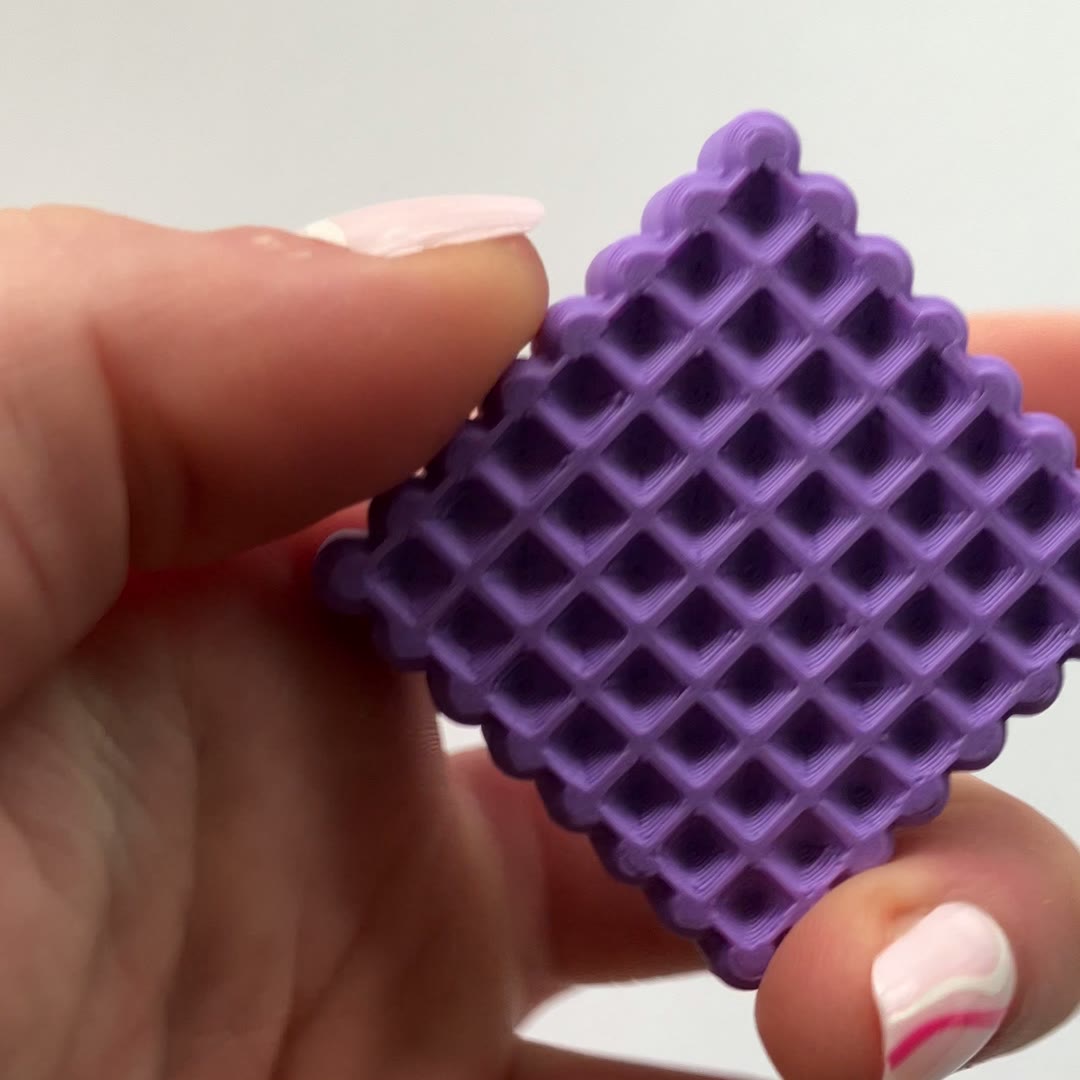
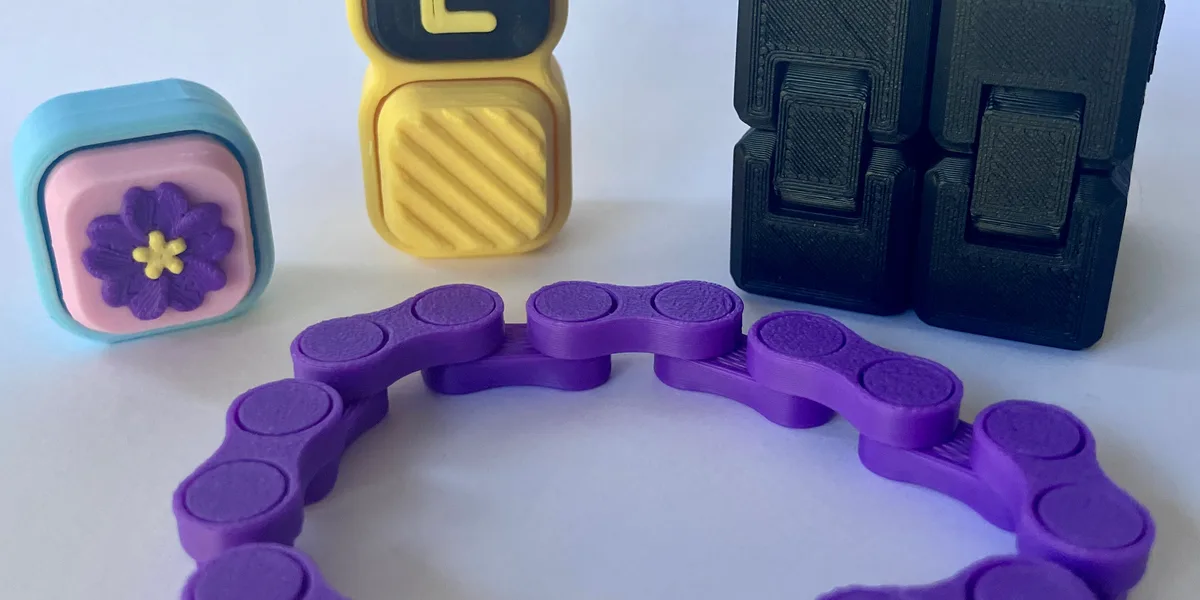
- Silent. Clickers are great fun but they click, which is the last thing an exam hall needs. A smooth or textured worry-stone style fidget makes no sound at all. Our noise level guide shows how quiet each type is.
- One piece. Nothing that comes apart, rolls off the desk or needs picking up from the floor.
- Plain. No writing, no screen, nothing that could look like notes.
- Familiar. The same fidget the student used in mocks, so there's nothing new to explain on the day.
Every toy we make is 3D-printed by us in Kent, in small batches, from PLA, a plant-based polymer, and carries the UKCA mark. The quiet ones below are the ones we'd suggest taking to the SENCo. For fidgets during revision and the nerves before the day, see our guide to fidget toys for exam stress.
Questions people ask
Are fidget toys allowed in GCSE exams?
They can be. The JCQ access arrangements rules list fidget toys and stress balls as an arrangement the school can put in place. The SENCo decides, based on whether the student has a substantial and long-term impairment and whether a fidget is their normal way of working in school.
Does the school have to apply to the exam board for a fidget toy?
No. JCQ says there is no requirement to process an application through Access arrangements online for fidget toys and stress balls, and no evidence is needed for inspection purposes.
Can I bring a fidget toy to my exam because I get nervous?
Not just for nerves. The arrangement sits in the JCQ section for candidates with disabilities, and the SENCo has to consider whether there is a substantial and long-term impairment. Talk to your SENCo early if you think it applies to you.
What is normal way of working for exam access arrangements?
It means the arrangement reflects how the student already works in school, for example in lessons, internal tests and mock exams. JCQ says an arrangement should not be granted suddenly at the time of the exams.
What kind of fidget toy is best in an exam?
A silent, single-piece fidget with no writing on it, ideally the same one the student used in their mocks. Clickers make a noise and are a poor choice for an exam hall.
A fidget that won't bother the next desk
Silent, single-piece fidgets that suit a classroom now and an exam hall later.
Shop quiet fidgets