Fidget Toys for University: Lectures, Seminars and the Library
Long lectures, small seminars and silent study floors each need a different kind of fidget. Here's how to choose, and where to get support.
· 5 min read

The short answer
At university nobody needs permission to hold a fidget in a lecture, but the people around you will notice noise. Pick a silent fidget for the library and small seminars, and a soft one for big lecture halls. If fidgeting is tied to ADHD, autism or another condition, your university's disability service is the place to ask about wider support.
Can you use a fidget toy in a university lecture?
Generally, yes. Lecturers are used to students doodling in the margins, and a fidget in one hand while you take notes with the other rarely gets a second glance. What does get noticed is noise, and a lecture theatre carries sound further than you'd expect when it's quiet.
In a big hall, a fidget in the soft band of our noise level guide is fine. That covers flexi animals, linkloop chains, spinners and infinity cubes, which make a faint sound you can hear and the row behind can't. Clickers are a different story. Every clicker we make clicks, so keep it for your room or the walk between buildings.
Two-hour lectures are where a fidget earns its place. If your mind drifts in the second hour, try keeping the fidget in your hand from the start rather than reaching for it once you've already lost the thread.
Fidgets in seminars and tutorials
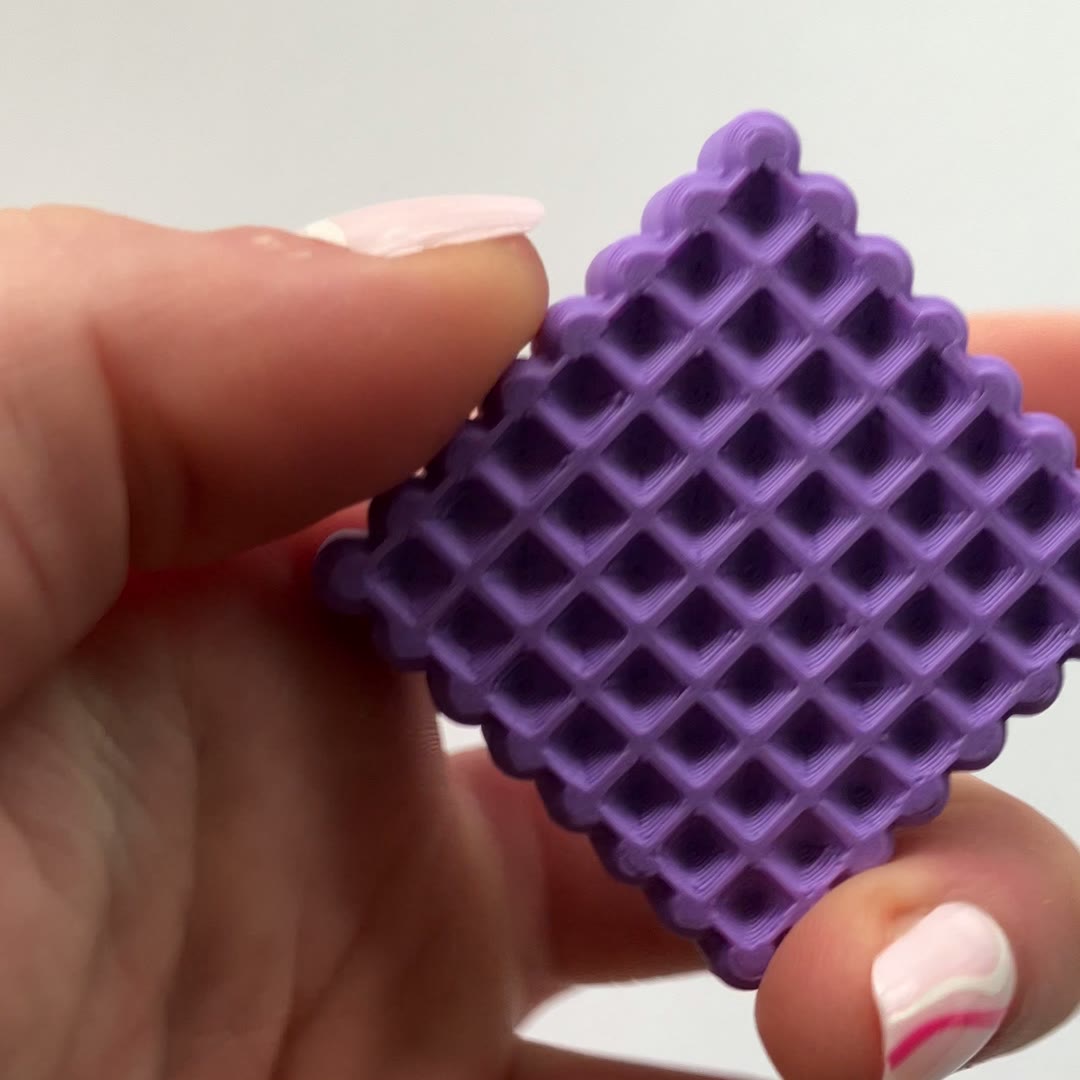
Seminars are smaller, closer and more conversational, so a fidget is more visible. A small textured grip fidget or a smooth worry-stone style fidget works well here. It sits in your palm under the table, makes no sound, and doesn't look like you're playing with a toy while someone presents.
If you're worried how it looks, a quick word with your tutor at the start of term saves any awkwardness. Most will simply be glad you mentioned it.
Group work in a seminar room is a good time to put the fidget down for a moment. When you're the one talking, your hands are usually busy enough, and you can pick it up again once the discussion moves on to someone else.
Quiet fidgets for the library and online lectures
Silent study floors are the strictest place you'll take a fidget. Stick to the silent band: textured grip fidgets and smooth worry-stone style fidgets. Spinners can be soft enough, but a dropped spinner on a silent floor is a memorable moment for everyone.
Online lectures and recorded content are the opposite. You're at your own desk, your mic is probably off, and you can use whatever helps, clickers included. Many students find a fidget useful for staying with a recording rather than drifting off to another tab.
For revision and the run-up to exams, we've written a separate guide on fidget toys for exam stress.
How to choose a fidget you'll actually carry
The best fidget for university is the one that's still in your bag in week eight. A few things make that more likely:
- Pocket size. You're moving between buildings all day. Anything bigger than your palm tends to get left on a desk.
- No loose parts. One-piece fidgets survive being thrown in a rucksack with a laptop and a water bottle.
- Two of them. Many students keep a silent one in their bag for public spaces and something clicky at home, where noise bothers nobody.
If you're not sure what suits you, our fidget quiz is a quick way to narrow it down. Every toy we make is 3D-printed by us in Kent, in small batches, from PLA, a plant-based polymer.
Getting support from your university's disability service
If fidgeting is part of a bigger picture, such as ADHD, autism, dyslexia or anxiety, it's worth talking to your university's disability service early in your first term. GOV.UK says all universities and higher education colleges should have a person in charge of disability issues you can talk to, and that education providers have a duty to make reasonable adjustments for disabled students.
That's also the route for exam adjustments. The JCQ rules your school followed cover qualifications like GCSEs and A levels, not degrees, so ask the disability service how your university handles adjustments in its own exams.
Disabled Students' Allowance (DSA)
If you live in England, you may be able to get Disabled Students' Allowance. GOV.UK says it covers study-related costs you have because of a mental health problem, long-term illness or any other disability, and lists things like specialist equipment and non-medical helpers. It's based on your needs, not your household income, and you don't pay it back.
The eligibility page gives ADHD and dyslexia as examples of a specific learning difficulty, and anxiety or depression as examples of a mental health condition. What DSA pays for is decided through a needs assessment, so don't expect it to cover a fidget toy. It's worth knowing about because the support it can arrange is far bigger than anything in your pencil case. Students elsewhere in the UK should check with their own student finance body.
Questions people ask
Is it rude to use a fidget toy in a lecture?
Not if it is quiet. Most lecturers will not mind a fidget in your hand while you take notes. Avoid clickers in lecture halls and seminars, because the noise carries.
What is the best fidget toy for a university library?
A silent one, such as a textured grip fidget or a smooth worry-stone style fidget. They make no sound and sit in one hand while you read.
Can I get reasonable adjustments at university for ADHD?
Talk to your university's disability service. GOV.UK says universities should have a person in charge of disability issues, and education providers have a duty to make reasonable adjustments for disabled students.
Does Disabled Students' Allowance cover ADHD?
GOV.UK lists ADHD as an example of a specific learning difficulty on the DSA eligibility page for students in England. What DSA pays for is decided through a needs assessment.
Do JCQ access arrangements apply at university?
No. JCQ rules cover qualifications such as GCSEs and A levels. Universities run their own process for exam adjustments, usually through the disability service.
Something for the second hour of the lecture
Silent and soft fidgets that sit in one hand while you take notes with the other.
Shop quiet fidgets