Something to Do With Your Hands When You Quit Vaping
A fidget won't make you quit, but it can give your hands something to do while you get through the cravings.
· 5 min read

The short answer
When you stop vaping or smoking, your hands lose a habit as well as your body losing nicotine. The NHS lists keeping your hands busy as one way to get through cravings, and a fidget is an easy way to do that. It isn't a quitting aid. For real help, the NHS Quit Smoking app and free local stop smoking services are the place to start.
Why your hands miss vaping
Anyone who has tried to stop will know this bit. The nicotine craving is one thing, but there's also the feel of the vape in your hand, the reach into your pocket, the lift to your mouth. You've done it hundreds of times a day, often with a coffee, on a break or while waiting for something. Taking it away leaves a gap your hands keep trying to fill.
That gap is where a fidget can earn its place. It won't touch the craving itself. It gives your fingers something to turn over while the urge passes.
What actually helps you quit
The NHS guide on how to quit vaping says distractions such as going for a walk, doing puzzles or keeping your hands busy can help you manage cravings. It also suggests cutting down gradually, picking places or times where you won't vape, and talking to a pharmacist or stop smoking adviser about nicotine replacement.
One important point from that page: if you vape to stay off cigarettes, only quit vaping when you're confident you can do it without going back to smoking.
The real support is free. In England, the NHS says that with professional or expert help you're three times more likely to quit for good, and local stop smoking services offer one-to-one or group sessions, help choosing stop smoking medicines and weekly support around your quit date. Wales, Scotland and Northern Ireland have their own free services, linked from the same page. There's also the NHS Quit Smoking app on NHS Better Health.
What to expect when you stop
The NHS lists the usual withdrawal symptoms as strong cravings, feeling irritable or low, trouble concentrating, feeling hungrier than usual and difficulty sleeping. Everyone's experience is different, and it's fine to feel rough for a while.
Restless hands sit right in the middle of that. Many people notice they're snacking more, tapping, or picking up their phone every few minutes. Having one object that's always in the same pocket gives that restlessness a single, harmless place to go. It also helps to tell the people around you that you're quitting, so nobody minds the fidget on the table at dinner.
A fidget for home: something that clicks
At home nobody minds a bit of noise, so this is where a clicker comes into its own. The click gives a small, satisfying full stop to each press, and pressing it over and over is an easy way to fill the time while a craving passes.
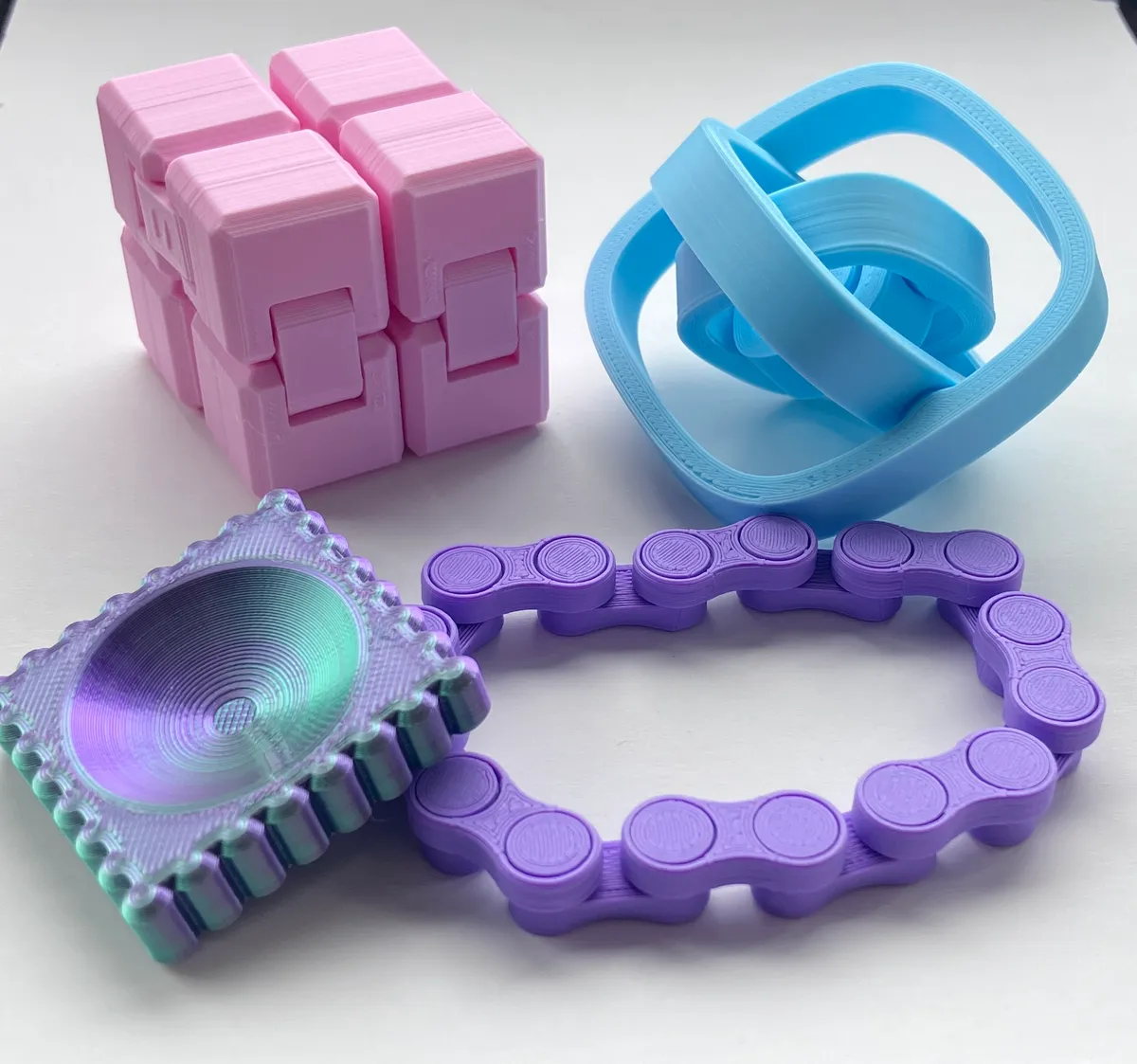
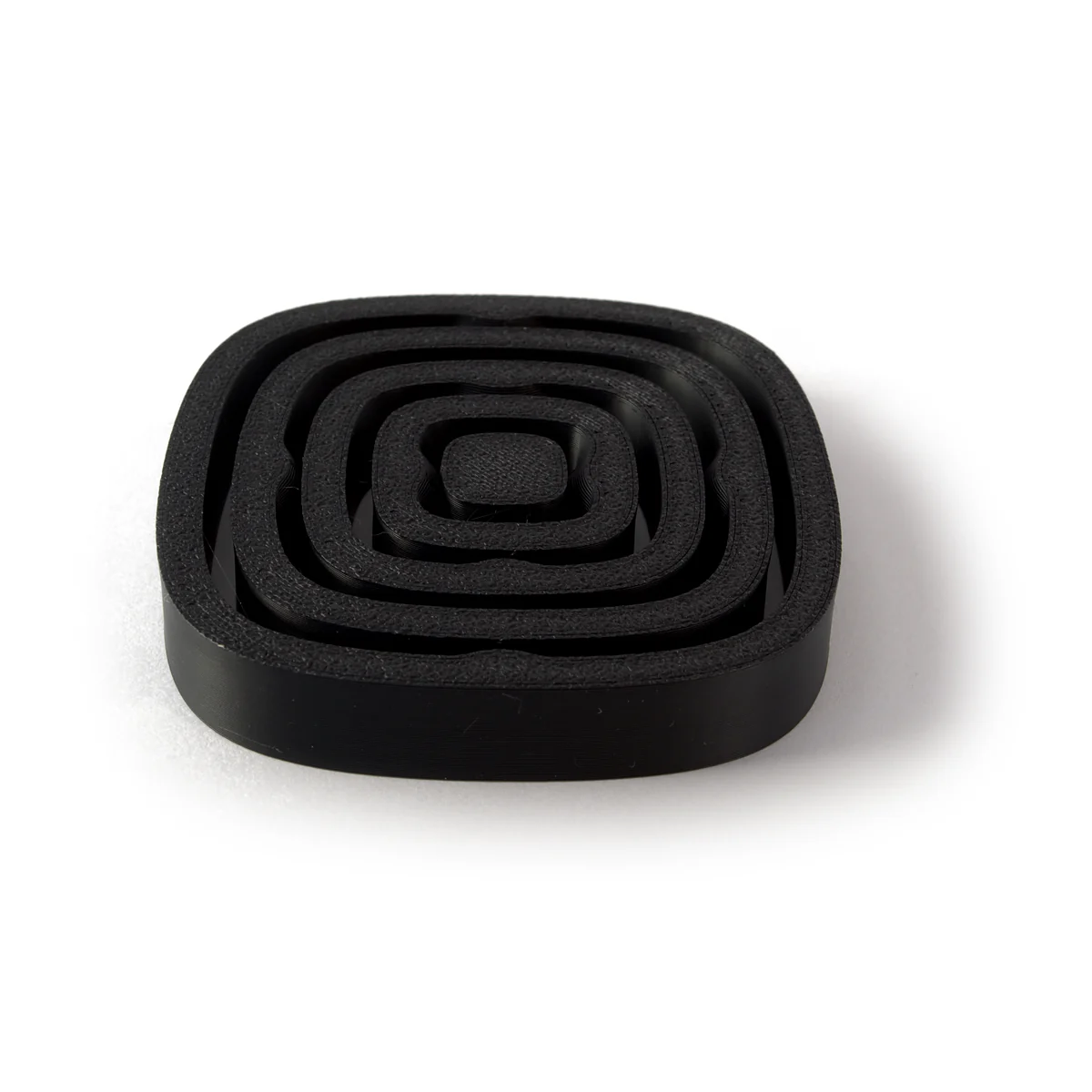
Other kinds work at home too. A spinner gives you something to watch as well as hold. A linkloop chain can be turned over and over in the same hand that used to hold the vape, which some people find helps with the hand-to-mouth reflex.
Keep it where the vape used to live. On the arm of the sofa, by the kettle, next to the back door if that's where you used to step out. Our guide to fidget clickers explains how they work if you've never used one.
A fidget for work: one nobody can hear
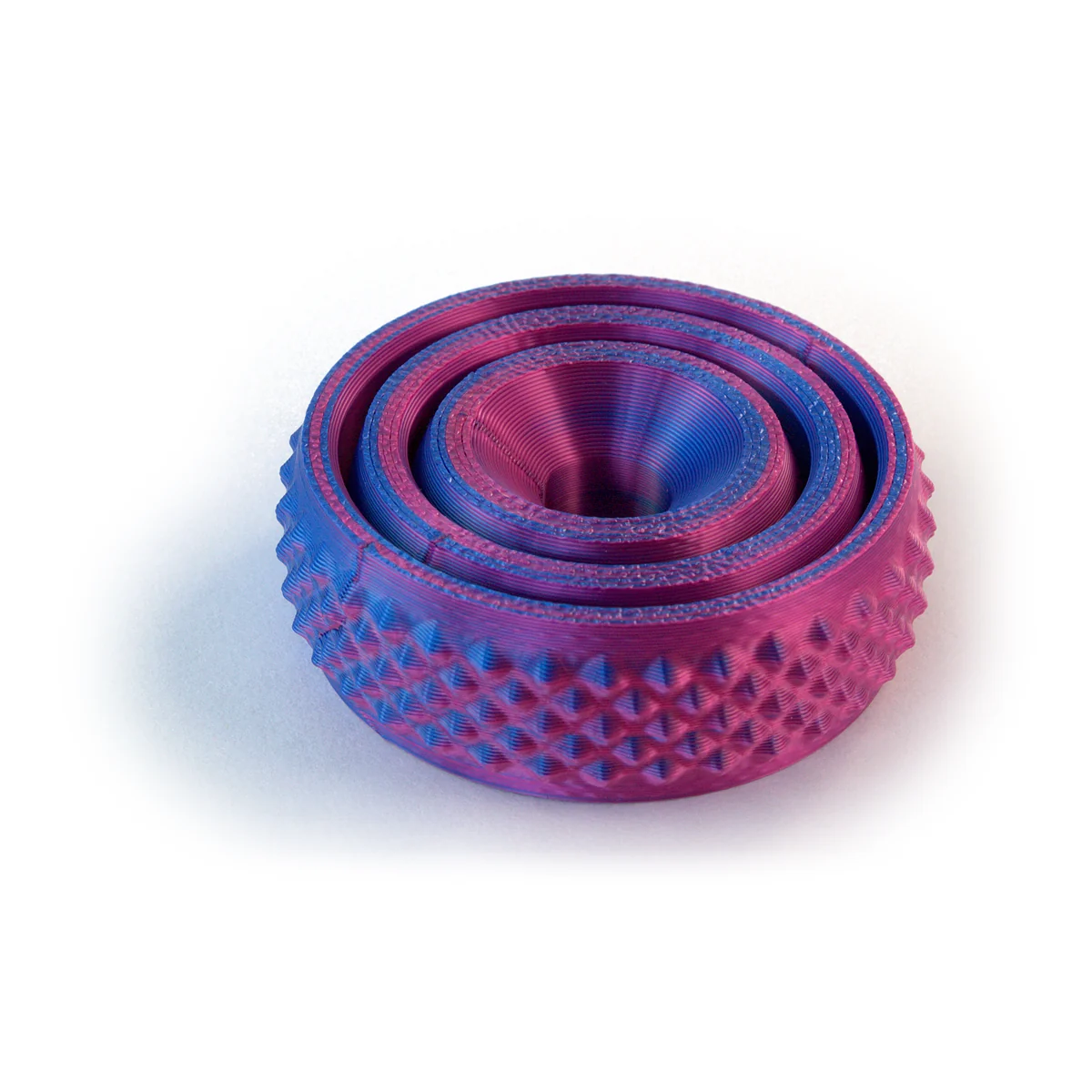
Work is often the hardest place, because breaks used to mean a vape. Clickers are too loud for a shared office or a call, so pick something silent instead. A textured grip fidget or a smooth worry-stone style fidget sits in a hand or a pocket and makes no sound at all. A small spinner also works if you've got a desk to rest it on.
It can help to keep a routine for breaks. Go outside, walk round the block, but take the fidget instead of the vape. Our page on quiet fidgets for work has more ideas for desk-friendly ones, and the noise levels guide shows which of our toys are quiet and which click.
Tips for the first few weeks
- Plan for your triggers. Morning coffee, the drive home, a night out. Have the fidget with you for those in particular.
- Keep two. One in your bag or coat and one at home, so it's always closer than the old habit.
- Don't put it in your mouth. Our fidgets are hard PLA plastic and are not chew toys, however much your mouth misses the vape.
- Go easy on a slip. The NHS says it's normal for quitting to take a few tries. Pick the fidget back up and carry on.
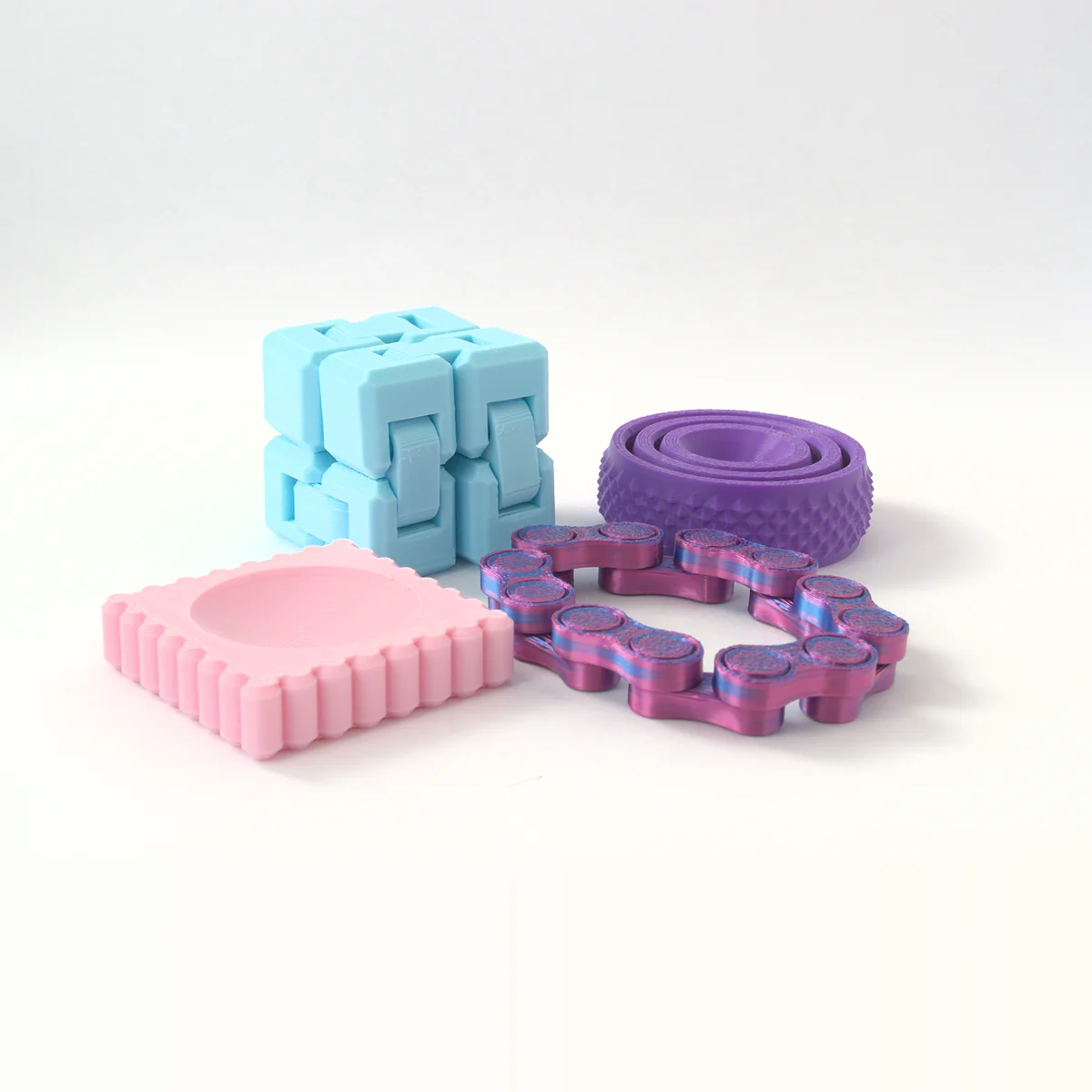
Every toy we make is 3D-printed by us in Kent, in small batches, from PLA, a plant-based polymer, and carries the UKCA mark. The ones below are a mix of clickers for home and quieter fidgets for work.
Questions people ask
Can a fidget toy help you quit vaping?
A fidget does not help you quit on its own, but it gives your hands something to do. The NHS lists keeping your hands busy as one way to manage cravings. For real support, use the NHS Quit Smoking app or a free local stop smoking service.
What can I do with my hands instead of vaping?
Try holding a fidget, doing a puzzle or going for a short walk. Keep something in the pocket where your vape used to be so your hand finds that instead.
What is the best fidget for quitting smoking at work?
A silent one, such as a textured grip fidget or a smooth worry-stone style fidget. Clickers make a noise, so save those for home.
Where can I get free help to stop vaping in the UK?
NHS stop smoking services are free. In England you can find your local service through NHS Better Health, and Wales, Scotland and Northern Ireland each have their own free services.
Should I stop vaping if I used it to quit cigarettes?
The NHS says you should only quit vaping if you are confident you can do it without going back to smoking cigarettes. A stop smoking adviser can help you plan it.
Something to hold instead
Clickers for home and silent fidgets for work, 3D-printed in Kent.
Shop all fidgets