Quick Pick for Focus
Quiet Fidgets - Silent operation means you can focus without disturbing anyone else.
Shop Quiet Fidgets →Can't Focus at Work? These 5 Fidgets Help
Your wandering mind might just need something for your hands to do.

We've all been there: staring at a screen, mind drifting, desperately trying to concentrate but getting nowhere. What if the solution was as simple as keeping your hands busy?
The Science of Fidgeting and Focus
A 2015 study by Sarver, Rapport, Kofler, Raiker and Friedman at UC Davis (Journal of Abnormal Child Psychology, vol 43) tracked boys with ADHD performing working-memory tasks. The boys who fidgeted the most while concentrating performed best — the more they moved, the more accurately they recalled. The team's earlier work showed the same pattern wasn't unique to ADHD: even neurotypical participants hit a measurable cognitive uplift when allowed to fidget during demanding tasks.
The mechanism, researchers suggest, is neurochemical. Light hand and finger movement nudges the brain's release of norepinephrine and dopamine — the two neurotransmitters that regulate attention and reward. ADHD brains tend to have a baseline shortfall of these; fidgeting acts as a self-administered top-up. Even neurotypical brains benefit when boredom, context-switching or fatigue has dropped focus below threshold.
In other words: fidgeting isn't a distraction. It's the body's natural focus tool. The trick at work is choosing the right kind of movement — something automatic enough not to compete for attention, but engaging enough to keep the brain's stimulation budget topped up.
The 5 Best Fidgets for Workplace Focus
1. Quiet Fidgets
"Quiet" is doing a lot of work here — it's not just about volume. A truly office-friendly fidget makes no audible click on a colleague's microphone, no clatter on a hot desk, and no visual distraction across the open plan. Tactile-only fidgets, smooth gyro spinners, and articulated chains all pass that bar; loud snap-clickers and ratcheting cubes don't.
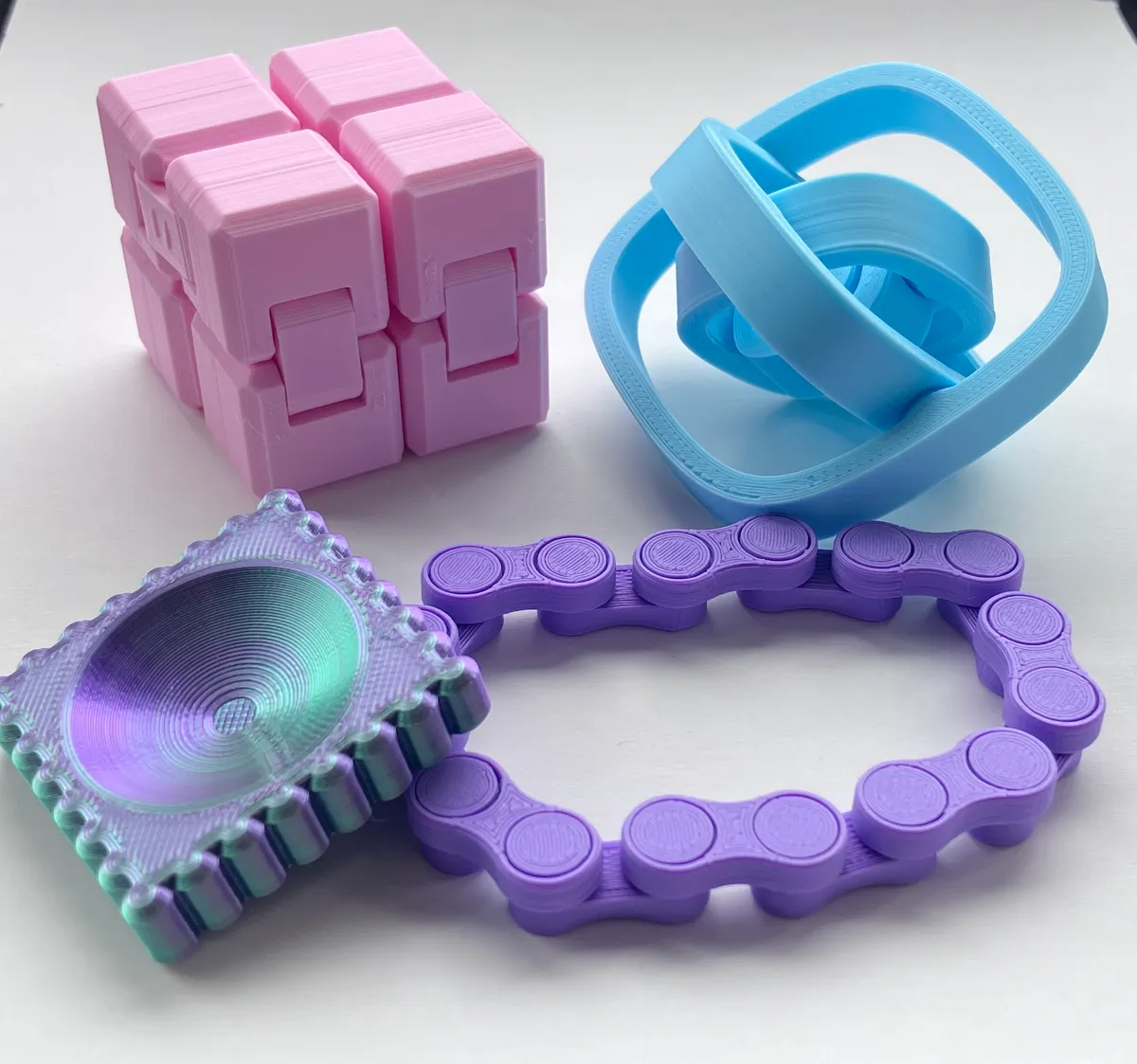
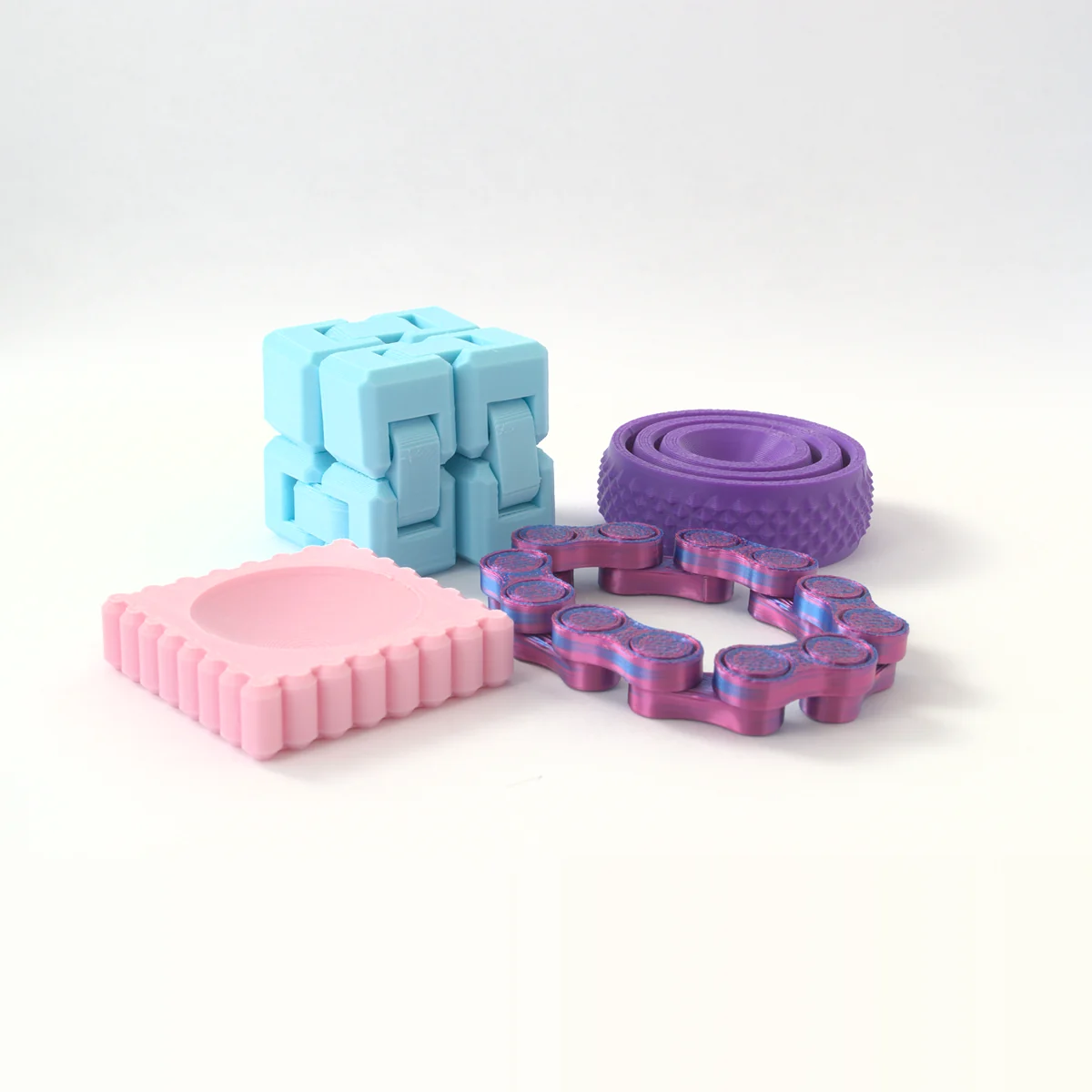
Our Worry Waffle is the closest thing we make to a "wear-it-all-day" fidget — silent thumb-rubbing across a textured surface, pocket-sized for desk-and-go. The LinkLoop Chain is the silent equivalent of a stress ball: endless smooth motion, one-handed, lives easily in a desk drawer.
Best for: Open offices, video calls, meetings, hot-desks
2. Flexi Pals
Articulated animals — segmented, jointed figures you can pose, slither and bend through your fingers — are the fastest-growing category in adult fidget toys for a reason. The micro-movements at each joint give your hand something endlessly varied to do without requiring any thought, and the animal shape disarms the "are you serious right now?" look from a colleague who notices.
The Flexi Snake at £3.49 is our entry point — small enough to keep in a pocket, satisfying enough that customers tell us they wear them out.
Best for: Long focus sessions, creative work, anyone who wants something to fidget with that doubles as a desk ornament
3. Shapeshifters
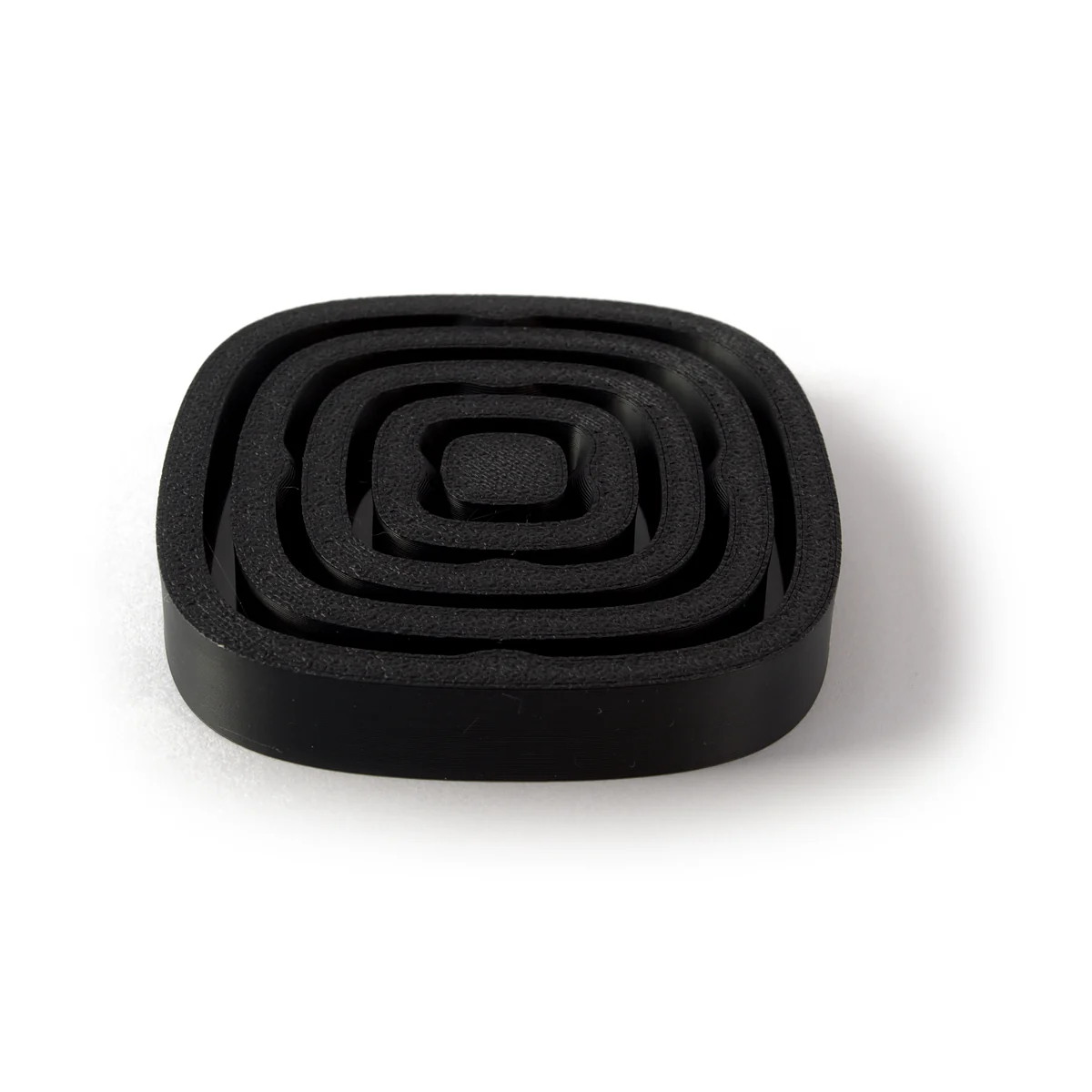
Geometric fidgets that transform between shapes — fold flat, expand into a star, collapse into a different polygon. The problem-solving element gives the analytical part of your brain something to chew on while the rest of it works. Several of our customers use them as a deliberate "5-second reset" between deep-work blocks: shape it, unshape it, back to the screen.
Best for: Brainstorming, creative blocks, transition moments between meetings
4. Spinners
Spinners get unfairly tarred with the 2017-playground-craze brush. A well-printed adult spinner with a quality bearing is a genuinely different object — silent, balanced, and weighted enough to give a 30+ second spin from a single flick. Watching the motion is meditative; the visual rhythm gives the wandering part of your mind something low-stakes to attend to while you process information on the screen.
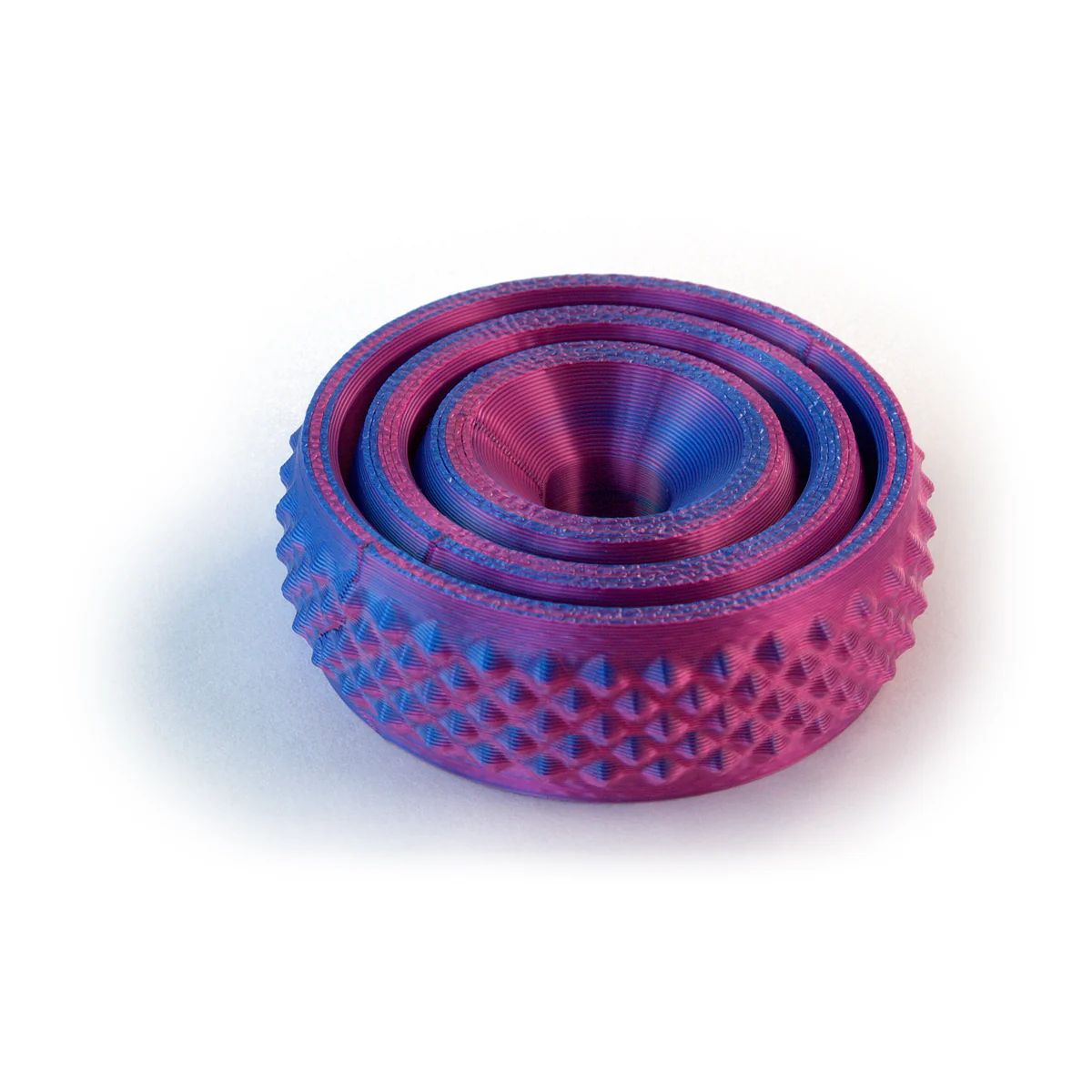
Our Classic Finger Spinner is the silent grown-up version — no LED, no plastic clack, just smooth tactile rotation. The Gyro Texture adds a textured outer ring for thumb input alongside the spin.
Best for: Waiting for code to compile, processing information, video calls where you can't visibly fidget
5. Infinity Cubes
Fold and flip endlessly for constant tactile feedback. The repetitive motion is deeply satisfying without requiring visual attention — once you've learned the unfold pattern, your hand does it automatically. This is the fidget that wins for people who describe themselves as "always doing something with my hands" — people who used to chew pens, click biros, or pick at thread on cuffs.
The Infinity Cube at £3.49 is our standard — eight blocks, near-silent fold, palm-sized.
Best for: All-day fidgeters, ex-pen-clickers, people who fidget unconsciously while reading
What we've heard from office customers
The pattern in our customer feedback is surprisingly consistent. People rarely buy "a fidget" — they buy two. One stays in the desk drawer for video calls and long meetings (almost always a Worry Waffle or a LinkLoop Chain). The other lives in a pocket or bag for the in-between moments — commute, queue, waiting for the kettle. The two fill different jobs: the desk one is for sustained low-stakes movement during cognitive work; the pocket one is for short bursts of stimulation when boredom hits.
The other thing customers tell us: don't pick the fidget you think looks coolest. Pick the one that matches what your hands already do. If you click pens, get a quiet clicker. If you bounce your knee, get a spinner you can flick. If you twirl your hair, get an articulated chain. The fidget is a redirect for an existing habit, not a new one to learn.
How to Fidget Effectively
- Keep it automatic. The fidget should require zero conscious thought. If you find yourself watching it, the cognitive load has shifted away from your work onto the toy. Pick something simpler.
- Match the task. Simple, repetitive fidgets (worry waffle, infinity cube) for complex work — they don't compete. Engaging, varied fidgets (shapeshifters, articulated chains) for boring or repetitive work — they keep stimulation up to threshold.
- Stay below-desk. Fidget where your hands naturally rest — in your lap, against the desk edge, in a pocket. Visible fidgeting reads as nervous energy to colleagues even when it isn't.
- Rotate after a few weeks. Novelty matters. The same fidget, used the same way, eventually fades into the background and stops working. Keep a couple in rotation.
- Pair it with the right caffeine timing. Fidgeting and caffeine target related neurochemistry. If you're already at peak stimulation from a third coffee, an active fidget can tip you into restless. Save the busier fidgets for the post-lunch dip.
When NOT to Fidget
Fidgeting helps with tasks requiring sustained attention. It hinders tasks requiring divided attention. If you're already multitasking — half-listening to a meeting while writing notes, switching between tabs — the fidget becomes one more thing competing for mental resources, not a release valve.
Other times to put the fidget down: when you're already moving (walking calls), when you're in flow (don't break it), and during high-stakes social situations like job interviews where the fidget can read as nervousness regardless of how calm you actually feel. A small tactile fidget in a pocket is fine; a visible spinner in front of a panel is not.
Lastly: if a fidget is genuinely making your focus worse — you find yourself watching it, planning your next manipulation, getting irritated when you misplace it — it's the wrong fidget for you. Try a quieter, simpler one. The right fidget feels like nothing.
The Bottom Line
If you struggle to focus at work, don't fight your natural urge to move — channel it. The research is clear that the right kind of low-effort movement supports attention rather than fragmenting it, especially for ADHD brains but increasingly for everyone working through long screen-based days. Pick something quiet enough for your office, simple enough that you don't have to think about it, and small enough to live in a desk drawer.
If you're new to it: start with a Worry Waffle for £3.49. It's the lowest-effort, lowest-risk way to find out if fidgeting works for you. If it does, you'll know within a week.
Find the Perfect Fidget for Work
Browse our full collection of office-friendly fidget toys.
Shop All Fidgets